At 55, Rajiv had begun measuring time differently. Promotions mattered less. Sunday mornings felt longer. The question following him home was no longer whether he could earn more, but whether what he had built would be enough.
One evening, he placed a retirement illustration beside two cups of tea. His projected pension was close to half his salary. The housing loan would be over. His commute would disappear. The children would be independent. Fifty percent looked comfortable.
This is the emotional power of a fixed pension promise. It converts an uncertain future into one reassuring monthly number. For families comparing a pension plan in India, that certainty can feel more valuable than every other feature.
Yet the calculation assumes retirement expenses shrink and then remain manageable. Some costs may fall, but housing maintenance, domestic help, utilities and family support do not vanish. More importantly, the 50 percent shortcut compares tomorrow’s income with today’s salary. It does not test whether that income can keep pace with tomorrow’s prices.
Sound retirement income planning must compare changing expenses with changing income over twenty-five or thirty years. Think of the pension as a water tank. Knowing its monthly outlet is useful, but not enough. You must also know how quickly consumption will rise, whether a medical emergency can drain the tank and what happens if retirement lasts longer than expected.
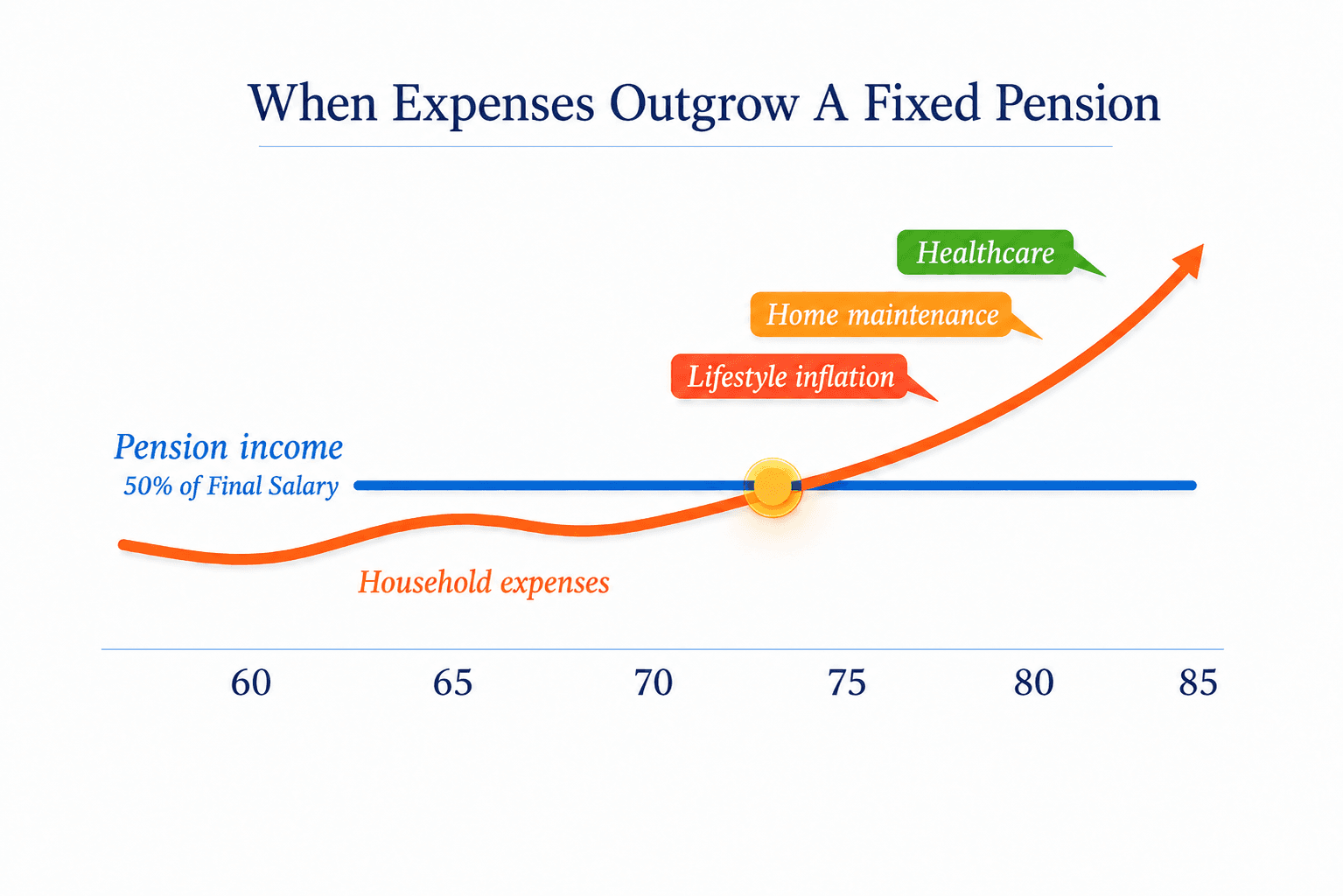
The dinner-table calculation gives Rajiv a starting number, but the next question reveals whether that number has any staying power.
The silent erosion of fixed monthly income
A fixed annuity is dependable because the payment does not change. That is true in nominal terms. The amount arriving in the bank may be identical each month. Its purchasing power, however, can shrink every year.
Imagine a boat anchored in a rising tide. The anchor creates stability, but it does not lift the boat. A guaranteed pension scheme can provide a valuable income floor, yet the guarantee usually applies to the rupee payment rather than the lifestyle it can purchase.
The Economic Times reports that annuity returns under the National Pension System generally range between 5.5 percent and 7.5 percent, depending on the provider, prevailing interest rates and the payout option selected. It also notes that annuity income is taxable according to the retiree’s applicable income-tax slab.
Meanwhile, Reserve Bank of India data shows that India’s average headline inflation was 4.6 percent between 2016 and 2026. Together, these figures reveal the limitation of relying entirely on a fixed pension. After inflation and taxes, the amount may provide stability without delivering enough real growth to preserve the same standard of living throughout retirement. This does not make annuities unsuitable. It means families should treat them as a dependable income floor rather than their only defence against rising costs.
Fixed annuity returns describe the locked payout. Stability helps with essential bills, but it may not respond to rising costs. Tax drag is the difference between the return shown and what remains after applicable taxes, like filling a bucket with a small outlet near the bottom.
If household expenses rise by 6 percent while pension income remains unchanged, ₹50,000 of monthly purchasing power falls to roughly ₹28,000 in today’s terms after ten years. That is why post retirement financial planning cannot rest entirely on one fixed payout.
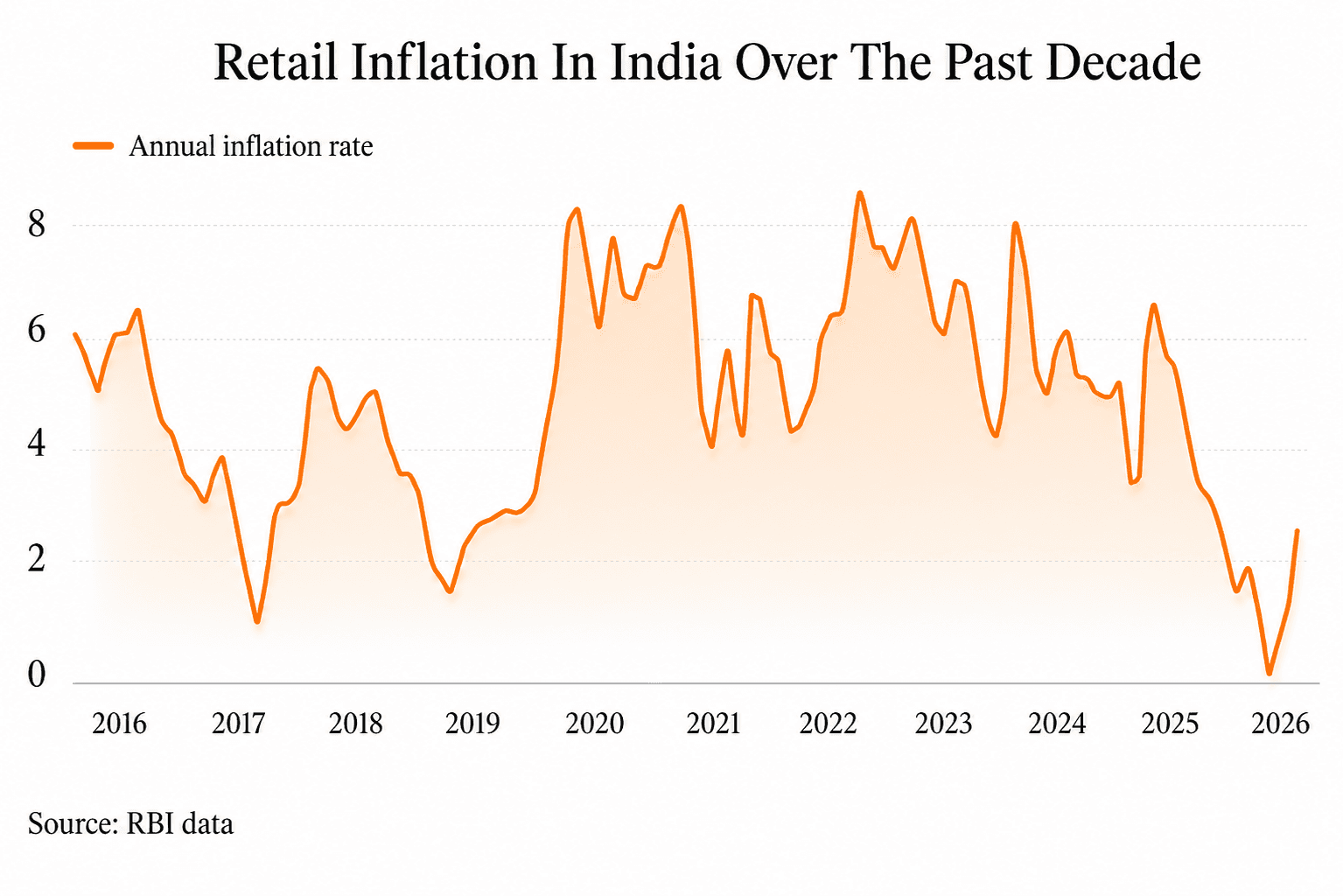
The pension may cover the electricity bill, but the first serious test often arrives from an expense that does not rise gently at all.
The unseen threat of healthcare inflation
Later one night, Rajiv’s wife opened a folder containing her father’s hospital bills. One admission had cost more than an entire year of the couple’s current health-insurance premium. The newer bill included costlier diagnostics, specialist fees, consumables and post-discharge medicines.
This is healthcare compounding. It is not simply that the same tablet becomes more expensive. Families also use more healthcare as they age, treatments become more advanced, and longer survival can require years of follow-up care.
Aon projected India’s employee medical-plan costs to rise by 11.5 percent in 2026, compared with projected general inflation of 4.1 percent. The forecast does not mean every hospital bill will rise at that exact rate. It does show why medical inflation in India deserves its own assumption.
At 11.5 percent annual growth, a ₹5 lakh treatment cost would become roughly ₹10 lakh in just over six years if that pace persisted. A fixed pension growing at zero percent cannot absorb that escalation without taking money from food, travel, repairs or the corpus.
The Axis Max Life IRIS 5.0 study, conducted with Kantar, found that 63 percent of urban respondents believed their retirement savings would last less than ten years. That finding becomes less surprising when medical expenses are treated as occasional shocks instead of a recurring retirement category.
A robust retirement corpus calculator should therefore separate ordinary living inflation from healthcare inflation. It should also include insurance premiums, deductibles, exclusions, non-payable items, long-term medicines and the possibility that employer cover disappears after retirement.
Once healthcare is modelled honestly, the apparent comfort of a large corpus can change with one spreadsheet entry, and the next danger is how late most families begin building it.
The 3.6 times savings gap and the late start trap
The most worrying retirement gaps appear when families compare what they have accumulated with what they hope to have.
A 2026 study by 1 Finance surveyed 1,218 respondents across more than twenty Indian cities, predominantly people aged 40 to 60. It found that 75.5 percent did not have a detailed retirement plan. The median respondent had accumulated ₹28 lakh against a target of ₹1 crore, a shortfall of about 3.6 times. The median age for beginning retirement-focused saving was 39.
The ₹1 crore target may not suit every household. It depends on retirement age, city, spending, healthcare, longevity and other income. The deeper message is that many families are chasing a goal already several times larger than their savings.
Starting at 39 is not fatal, but every missed year becomes expensive. Compounding resembles planting a mango tree. Early progress looks slow, while later growth accelerates. Starting at 30 gives every contribution nine additional years to grow compared with starting at 39.
A retirement corpus calculator is only the beginning. It must test returns before and after retirement, taxes, separate healthcare inflation and survival of the corpus until at least age 90.
The same survey reported healthcare as the leading retirement concern for 82 percent of respondents, yet concern without a funded strategy does not protect the corpus. A useful plan converts anxiety into annual savings targets, insurance decisions and a withdrawal sequence.
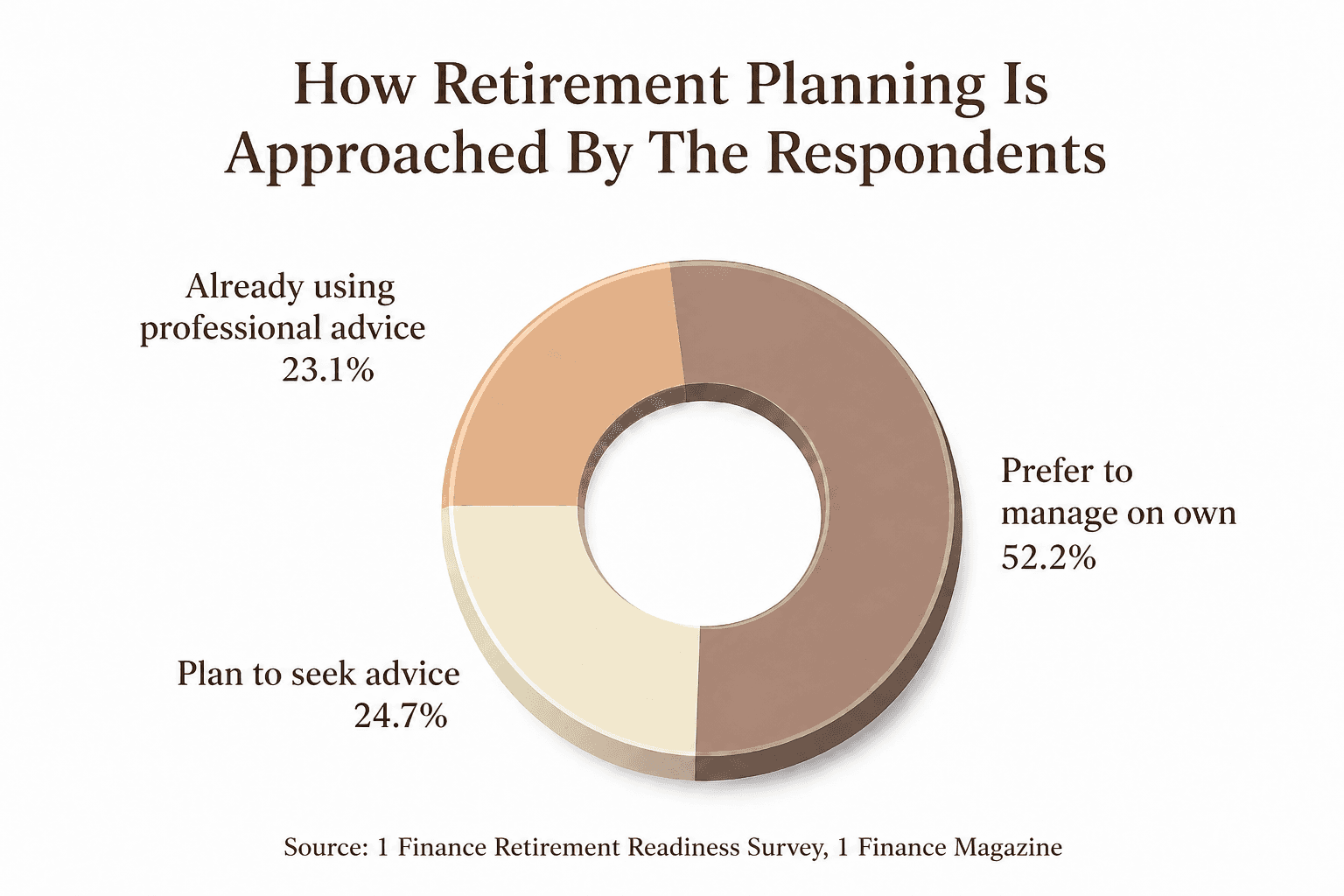
The late-start trap becomes more dangerous when families respond by chasing one high return or buying one comforting product, which is why the solution must be built in layers.
Rebuilding the modern post-retirement blueprint
A resilient retirement plan is not a single product. It is a system in which different assets perform different jobs.
Begin with the income floor. Estimate essentials such as food, utilities, healthcare, insurance and home maintenance. Predictable sources may include annuity income, pension benefits or high-quality debt. A suitable guaranteed pension scheme can belong here, but it should be the floor rather than the entire house.
Next, keep roughly eighteen to twenty-four months of withdrawals in cash, liquid funds or other suitable low-volatility instruments. This reduces forced selling during a market fall.
The third layer is growth. Diversified equity may help the corpus outpace inflation over three decades. The percentage depends on age, income needs, risk capacity and tolerance for declines. In retirement income planning, equity is included because a fully fixed portfolio may lose purchasing power.
The fourth layer is healthcare protection. Maintain adequate base insurance and assess a super top-up above the deductible. Review room-rent limits, co-payments, waiting periods, exclusions and renewal terms. Hold a reserve for non-covered expenses because medical inflation in India can damage a sound portfolio.
Finally, decide which bucket funds each year, when to rebalance and when equity gains will refill liquidity. This turns post retirement financial planning from products into an operating system.
Review the plan annually and after retirement, bereavement, diagnosis, relocation or a major family commitment. Use conservative return assumptions, model a longer lifespan and stress-test weak markets combined with a medical claim.
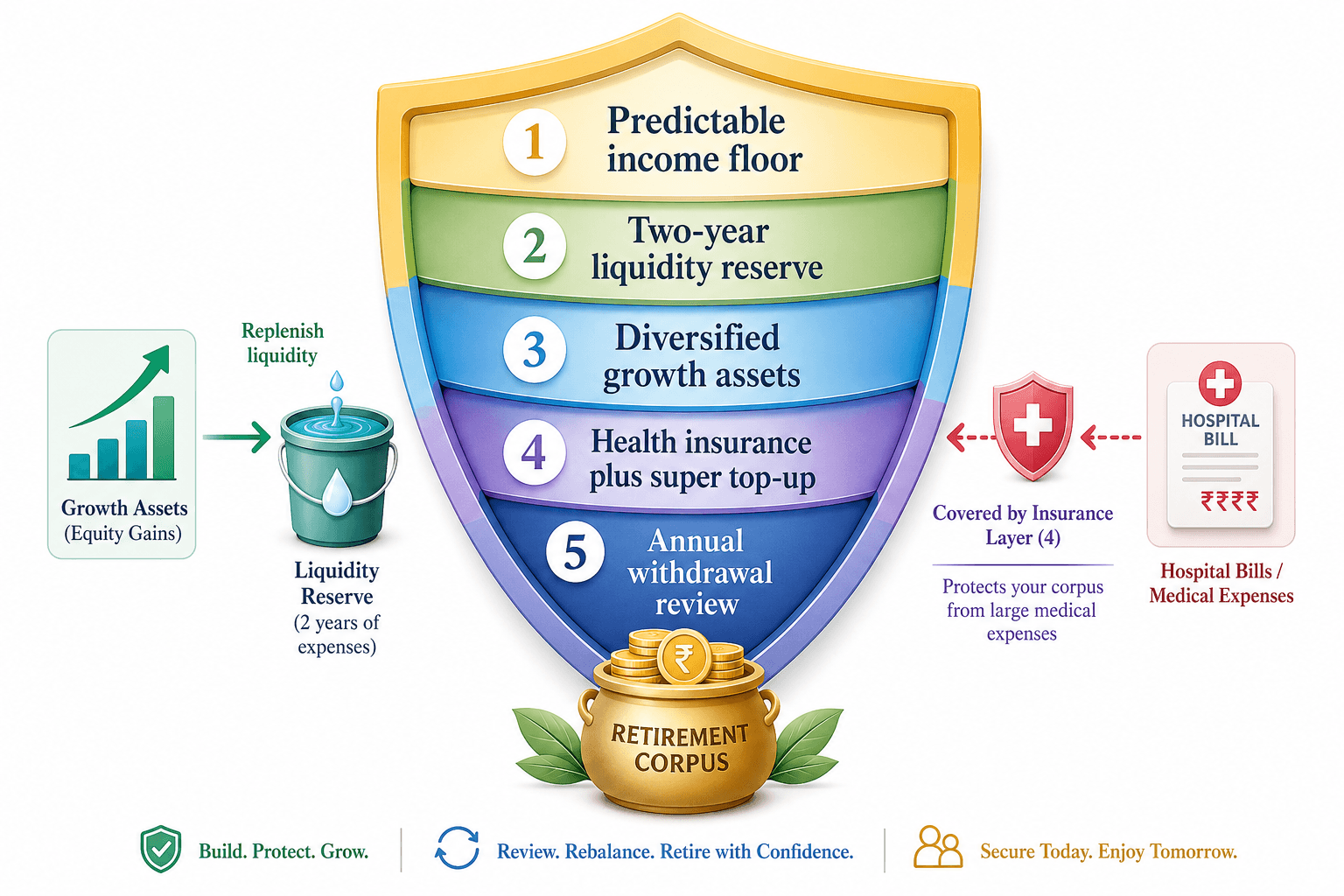
This layered approach cannot remove uncertainty, but it prevents one weak assumption from controlling the family’s future, and the final test is whether the plan can prove its resilience on paper.
What your retirement plan must prove before you trust it
Before committing to any pension plan in India, ask for a year-by-year projection rather than one maturity number. It should show income, household expenses, healthcare costs, taxes, insurance premiums, withdrawals and the remaining corpus at every age.
Run three versions. The expected case can use reasonable long-term assumptions. The difficult case should include weaker returns and higher healthcare costs. The longevity case should extend the plan to age 95. A plan that works only when every assumption behaves perfectly is not a plan. It is hope presented in spreadsheet form.
Separate product certainty from retirement certainty. A fixed payout may be contractually reliable and still be insufficient. A market-linked asset may fluctuate and still be necessary for long-term growth. The aim is to combine safety and growth so essential expenses remain protected while the wider corpus can fight inflation.
For personalised decisions, consult a SEBI-registered investment adviser and review insurance suitability independently. This framework is educational and should be adapted to your income, assets, dependants, tax position and health profile.
The strongest retirement plan is not the one promising the most comforting monthly number, but the one that keeps working when life becomes more expensive than expected.

Newly Launched

Pockvue Solutions Private Limited
#1, CRE Spacez, 2nd Floor, 14th Main Road,
Sector 5, HSR Layout, Bengaluru - 560102