

The Career Paths That’ll Go Obsolete by 2030
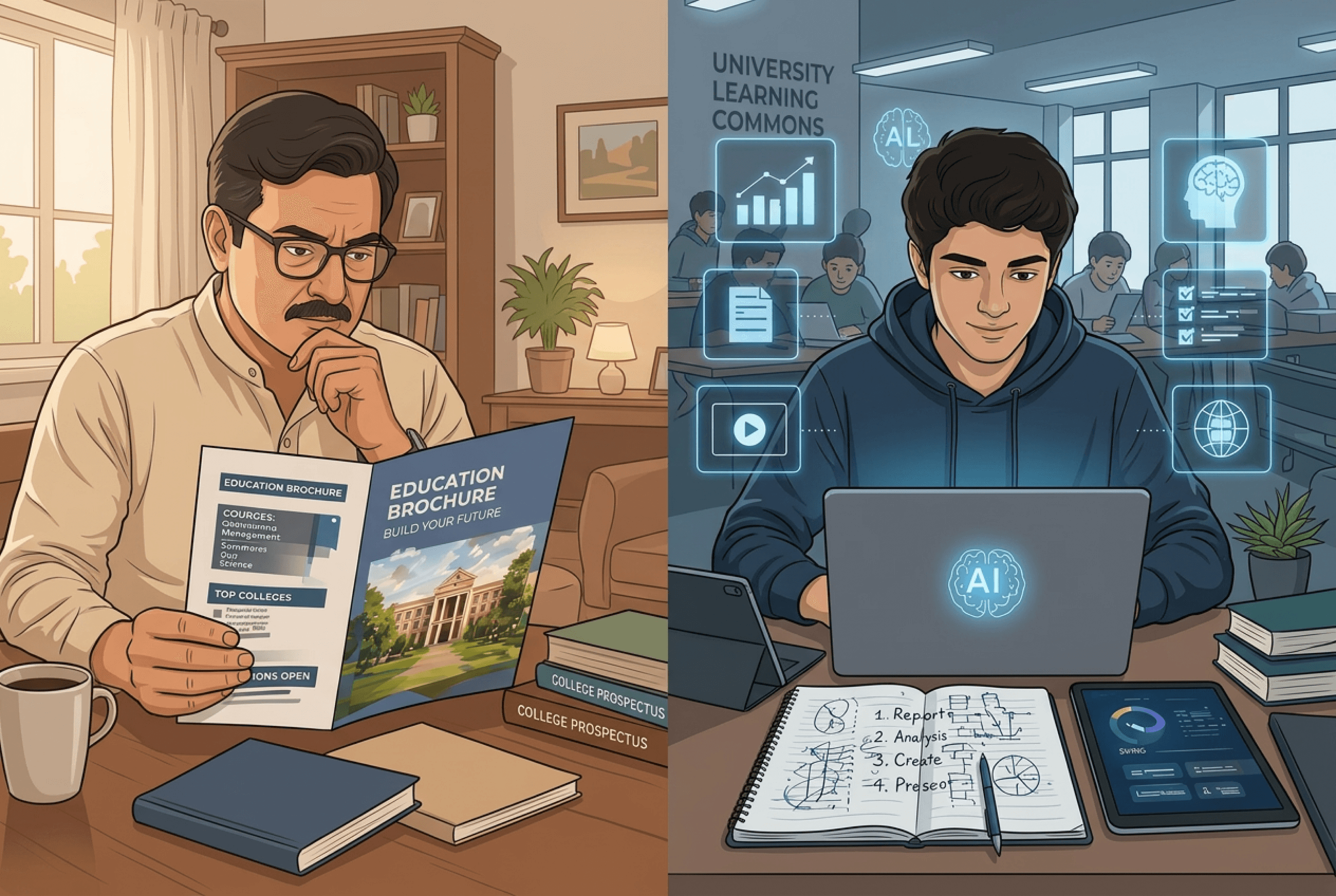
It began with a simple evening ritual. A parent sat across the dining table, flipping through a glossy college brochure promising placements, prestige, and a “secure future.” At the same time, their child was watching a video where an AI tool wrote code, drafted legal contracts, and analysed financial data in seconds. That contrast is no longer unusual, and it raises a question most families are quietly avoiding.
What exactly are we paying for when we invest in education today?
Because for decades, the answer was simple. Education was a ladder. You climbed it, got a degree, secured a job, and built stability. But the foundation of that ladder is shifting faster than most households realise. The real concern is not whether education matters, but whether we are choosing the right kind of education in a world where machines are learning faster than humans can adapt.
And this is where the conversation becomes uncomfortable.
How White-Collar Jobs Are Being Crowded Out
We often think of automation replacing factory workers or drivers. That story feels distant from families investing in degrees worth ₹20 to ₹50 lakhs. But the real shift is happening quietly in offices, not factories.
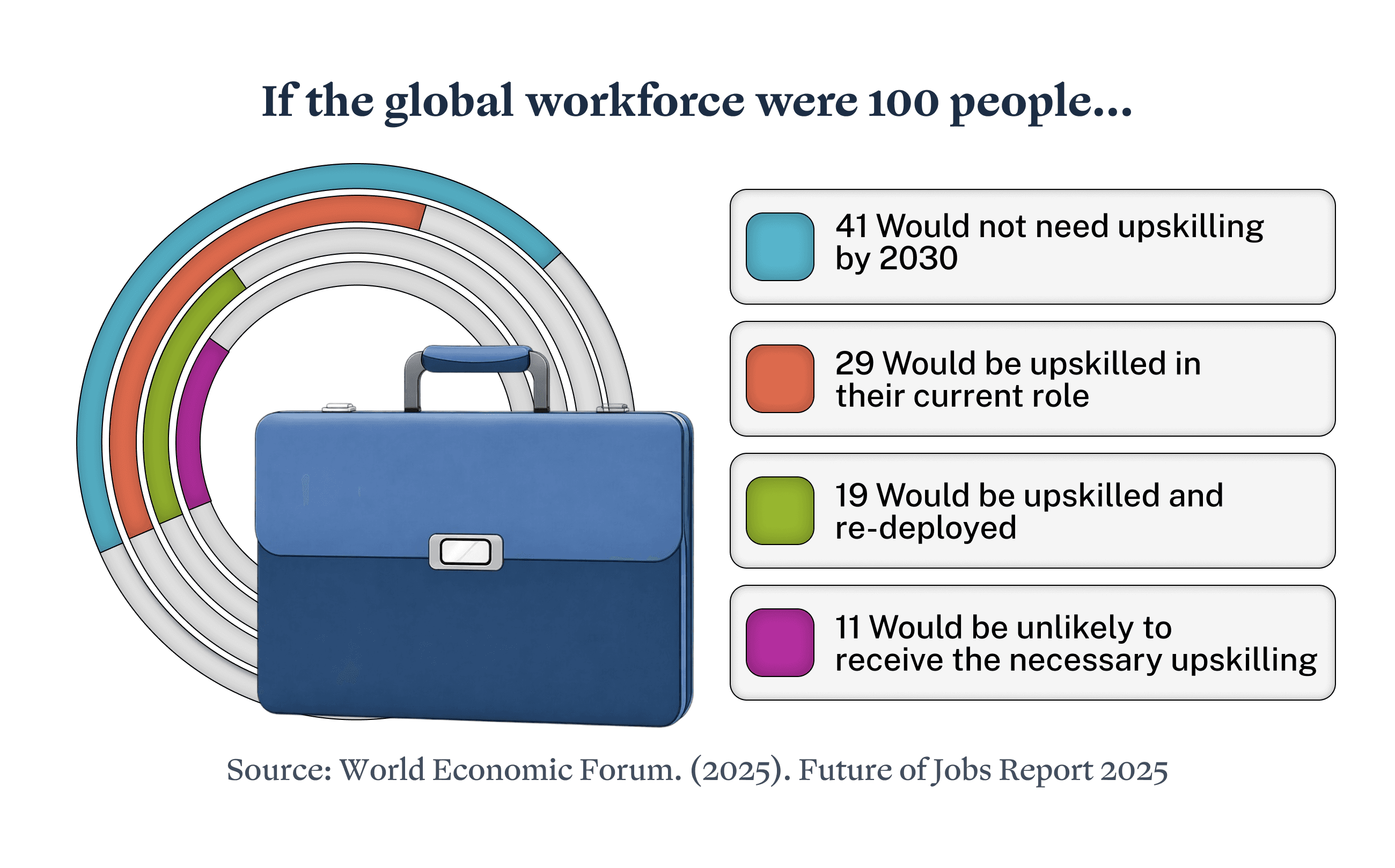
According to the World Economic Forum (Future of Jobs Report 2025), nearly 44% of workers’ core skills are expected to change within the next five years. More importantly, roles that rely on repetition, standardisation, and predictable outputs are shrinking rapidly.
This is what economists call white-collar automation, and it is creating a phenomenon known as “economic crowding out.” When AI tools perform tasks faster and cheaper, companies hire fewer people for those roles. Over time, supply of workers exceeds demand, pushing salaries down and job security out of reach.
This is not a distant forecast. It is already visible in hiring trends across IT services, legal research firms, and financial processing units. The real question is not whether jobs will disappear completely, but how their value will change.
And that leads us to a critical shift in how we evaluate education itself.
The Changing Economics of Degrees
In 2010, degrees in engineering, commerce, and law were seen as “safe bets.” They offered predictable returns and clear career paths. But by 2030, those same degrees could become high-risk investments if they are not aligned with evolving skill demands.
This is where Education ROI 2030 becomes essential. Families are no longer just buying education. They are making a financial investment with expectations of returns in the form of income, stability, and growth.
Consider this. If a student spends ₹30 lakhs on a degree that leads to a job paying ₹4–6 lakhs annually, and that role faces automation risk within 5 years, the return on investment becomes uncertain. In contrast, shorter, skill-focused programs that adapt to market demand may offer better flexibility and resilience.
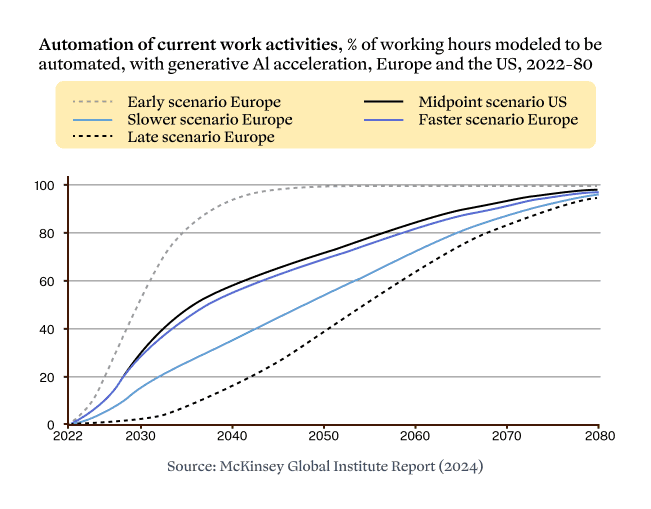
A McKinsey Global Institute report (2024) highlights that generative AI could automate up to 30% of current work hours globally by 2030. That directly impacts the value of degrees tied to routine cognitive tasks.
So the real risk is not education itself. The risk is investing heavily in outdated pathways without evaluating their long-term relevance.
Careers That May Not Survive 2030
Let us move beyond theory and look at reality. Which roles are most vulnerable?
Basic Coding and Software Testing
AI tools can now write, debug, and test code with minimal human intervention.Data Entry and Administrative Roles
Automation has already reduced the need for manual data processing.Paralegal and Legal Research
AI can scan thousands of documents in seconds, replacing repetitive legal tasks.Financial Data Analysis and Auditing
Machine learning models can analyse patterns and detect anomalies more efficiently.Content Writing for Basic Use Cases
AI-generated content is already replacing low-complexity writing tasks.
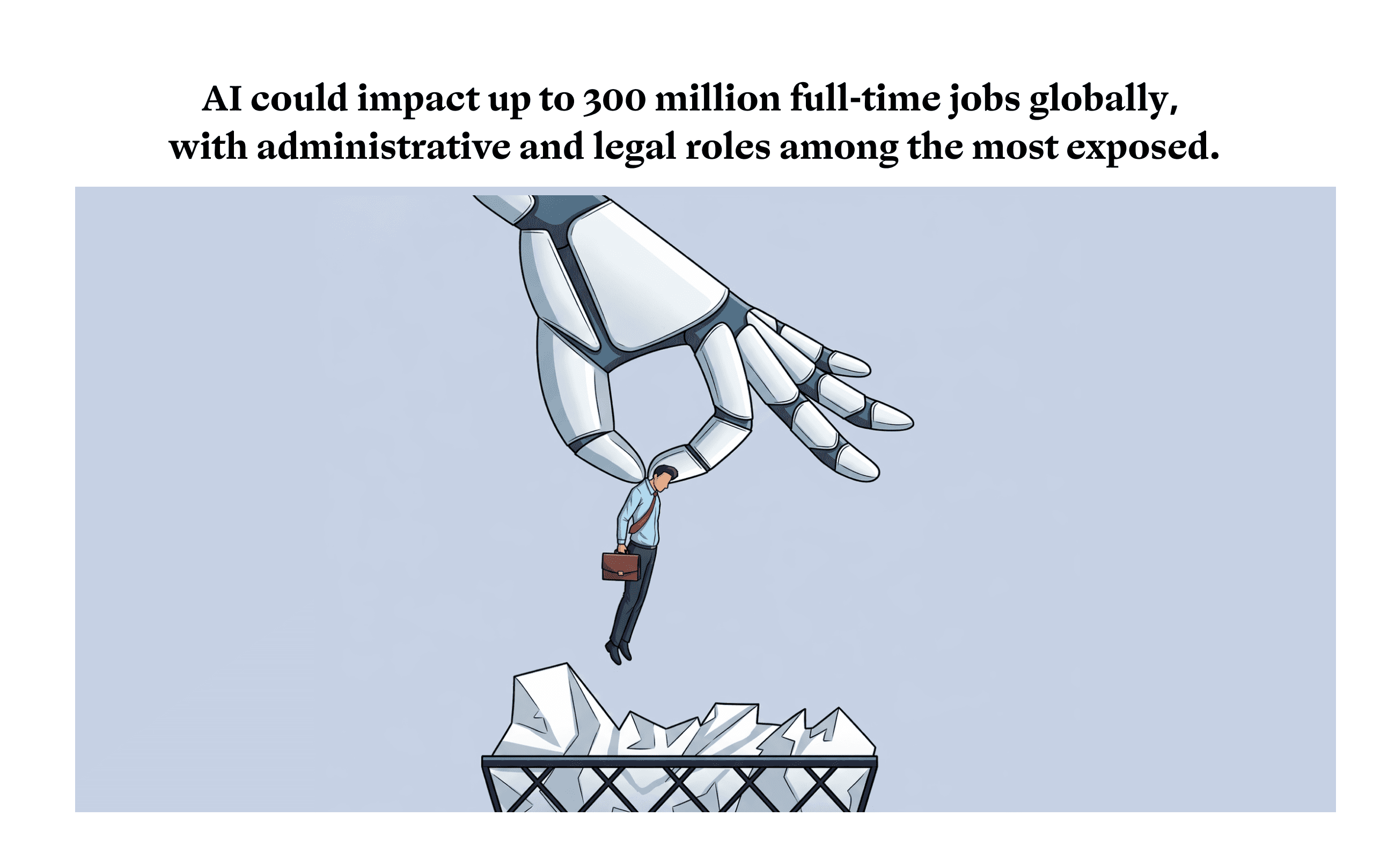
These are not guesses. A Goldman Sachs report (2023-2025) estimated that AI could impact up to 300 million full-time jobs globally, with administrative and legal roles among the most exposed.
The common thread across these roles is predictability. If a task can be broken into steps, it can likely be automated. This is why discussions around obsolete career paths are becoming more urgent. Students today are not just choosing careers. They are choosing how adaptable their future will be. But if some paths are fading, others are emerging.
What Future-Proofing Education Actually Means
The idea of future-proofing degrees is often misunderstood. It does not mean choosing a specific course that guarantees success. It means choosing a direction that builds adaptability.
Fields that combine human judgement with technical understanding are gaining importance. These include:
AI ethics and governance
Data-driven decision making
Financial planning and behavioural finance
Creative problem solving and design thinking
Entrepreneurship and product development
These roles are harder to automate because they involve ambiguity, creativity, and human context.
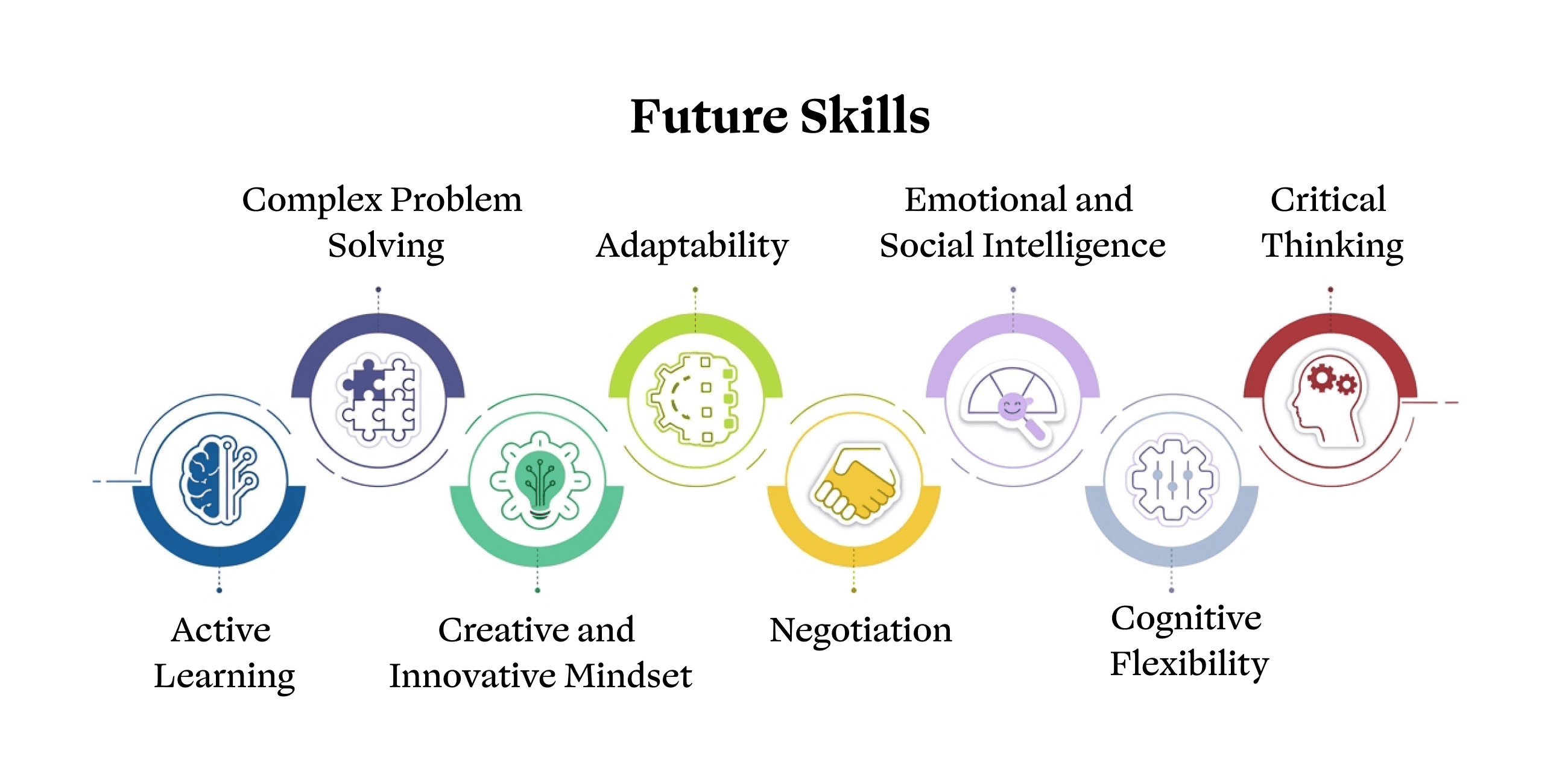
A key insight from the World Economic Forum is that analytical thinking, resilience, and leadership are becoming more valuable than technical skills alone.
This changes how students should approach education. The goal is no longer to master a fixed skill. It is to develop the ability to learn, unlearn, and relearn continuously.
And this is where households must rethink their approach to decision-making.
The Real Decision Ahead
The question is no longer whether education is important. That answer has always been yes. The real question is whether we are aligning education with the realities of a rapidly changing world.
Because when it comes to education decisions, even financially aware households often switch from logic to emotion. Reputation takes over from returns. Familiar paths feel safer than uncertain ones. And the conversation shifts from “Is this the right investment?” to “Is this what everyone else is doing?”
This is where the idea of Education ROI 2030 needs to evolve. It is not just about calculating fees versus salary. It is about assessing durability. How long will this skill remain valuable? How easily can it adapt to technological shifts? What happens if the role itself changes or disappears within a decade?
A degree today should be evaluated like a long-term financial asset. It carries upfront cost, ongoing opportunity cost, and a variable return profile. But unlike traditional investments, it also carries concentration risk. Most students invest years into one domain, making diversification difficult later.
This is why the conversation must move beyond affordability and into strategic positioning. Instead of asking “Can we afford this degree?” families need to ask “Does this degree build leverage?” Does it open multiple pathways, or lock the student into a narrow, potentially declining role?
For students making their own career choices, this shift is even more critical. The goal is no longer to pick a stable job. It is to build a skill stack that compounds over time. One that allows movement across industries, roles, and opportunities as the market evolves.
Because in a world shaped by AI job displacement, financial awareness alone is not enough. What matters is the ability to translate that awareness into decisions that protect and grow long-term value.
And that leads to a sharper question most families are only beginning to confront. Are we choosing education based on past success stories, or future relevance?

Pockvue Solutions Private Limited
#1, CRE Spacez, 2nd Floor, 14th Main Road,
Sector 5, HSR Layout, Bengaluru - 560102