When rain exposes the real price of broken cities
On a rainy Bengaluru morning, a routine road journey became a tragedy that shook an entire neighbourhood.
Medha Akarsh, a 32-year-old EPFO employee, lost her life after an accident on Ananth Nagar Main Road in Electronics City Phase 2. Residents pointed towards severe road deterioration and waterlogging as symbols of a larger civic failure that had been building silently for years.
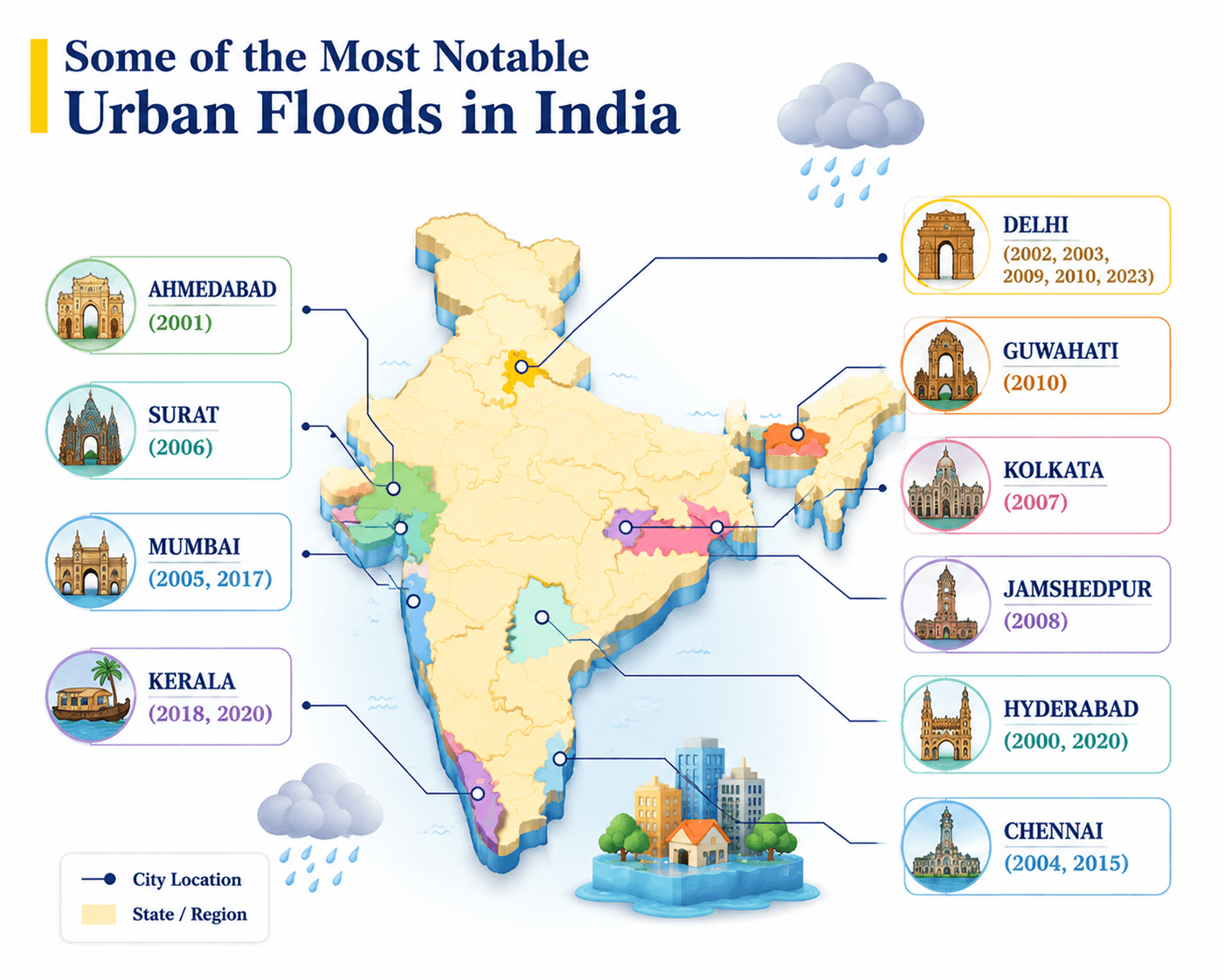
The tragedy was not only about one damaged road. It represented a much wider problem faced by urban India. Every monsoon, millions of commuters in Mumbai, Delhi-NCR, Chennai, Kolkata and Bengaluru navigate roads where a few minutes of heavy rain can transform normal travel into a financial gamble.
A pothole can damage a suspension system. A flooded street can destroy an engine. A delayed commute can reduce productive working hours. A preventable accident can create medical expenses that disturb an entire family budget.
This is the real financial impact of urban flooding in India. The damage does not begin when a city is declared flooded. It begins when households start spending money to compensate for systems that failed around them.
A family emergency fund is designed for unexpected personal events such as illness or job loss. But increasingly, households are forced to use that same safety net for predictable infrastructure failures.
The question is how a broken road outside your home can eventually become a hole inside your savings account.
The hidden household drain created by monsoon damage
A middle-class commuter often notices the visible damage after heavy rainfall, but the financial impact starts much earlier.
A vehicle crossing waterlogged roads may suffer engine water ingress. Modern cars are especially vulnerable because a hydrostatic lock can cause severe engine damage when water enters the combustion chamber.
Depending on the severity of damage, repairs can range from a few thousand rupees for tyre and suspension issues to significantly higher bills when critical engine components are affected. Add increased servicing frequency, roadside assistance costs and occasional medical expenses from accidents, and the seasonal burden can quickly disrupt household budgets.
These expenses represent the growing out of pocket expenses for car water damage that many families underestimate while planning annual budgets. The problem is not only the repair bill. It is the timing.
A car breakdown before a school payment deadline or during a medical emergency creates financial pressure because households rarely maintain separate buffers for infrastructure-related expenses.
A flooded road effectively behaves like a slow leak in a household emergency fund. The money does not disappear at once, but repeated small withdrawals gradually weaken financial stability.
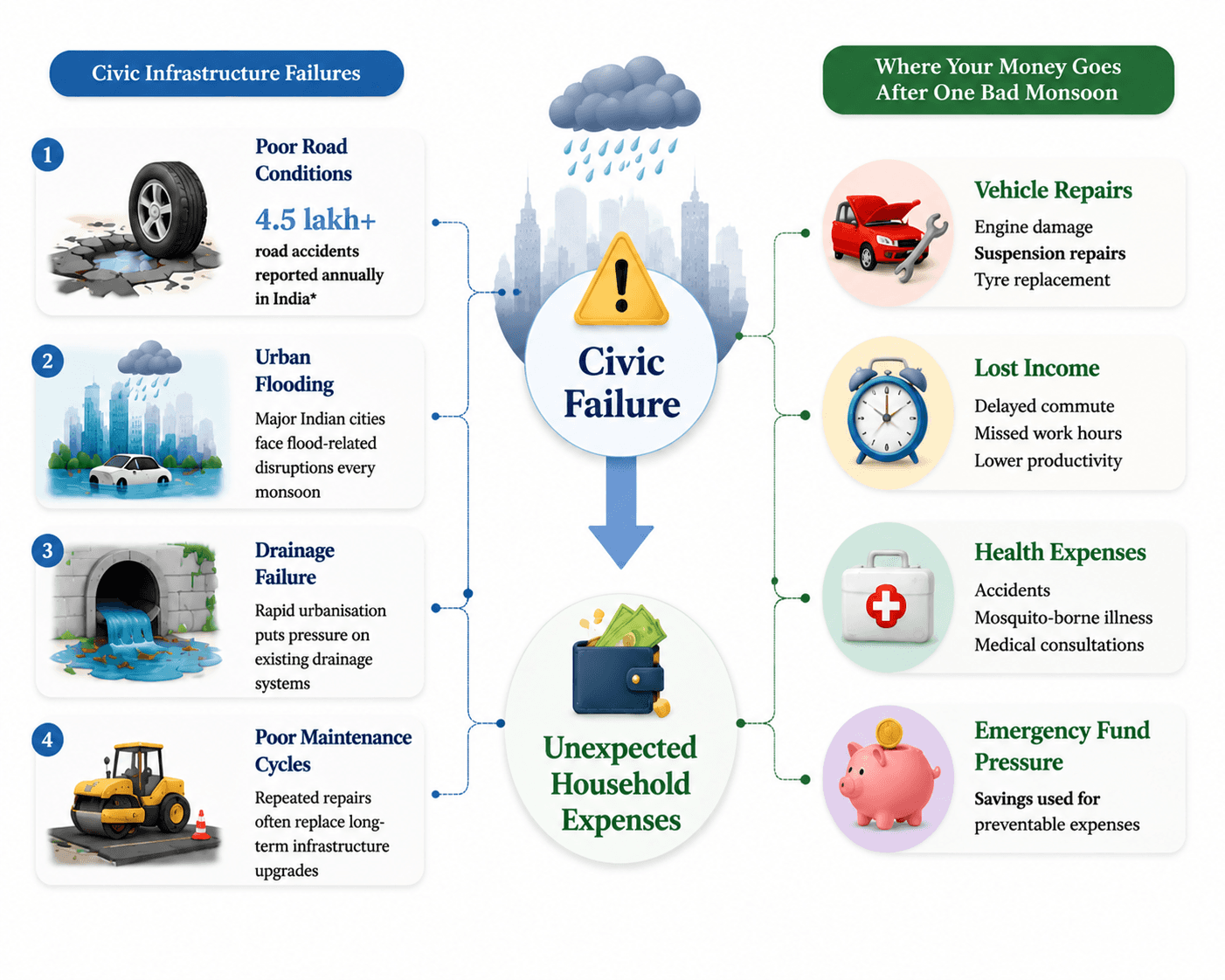
The hidden cost of civic infrastructure failure becomes visible when families realise that their savings are protecting them from problems beyond individual control.
The next challenge is understanding why insurance does not always cover this entire financial burden.
Why insurance covers only a part of the flood damage
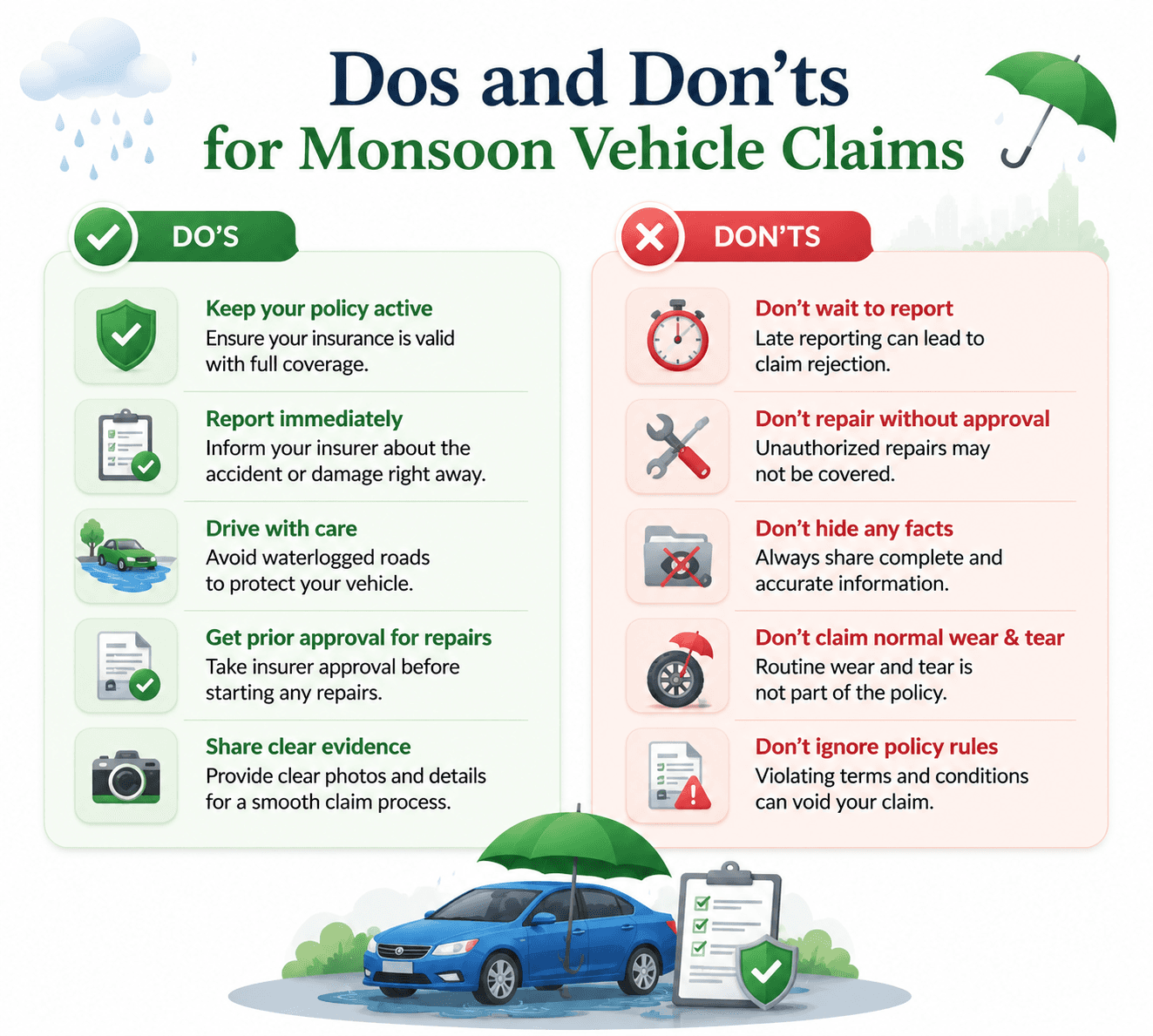
Many vehicle owners assume that insurance will completely protect them during extreme weather events. Reality is more complicated. Insurance policies may cover certain types of accidental damage, but claim acceptance depends on policy conditions, documentation and the specific cause of damage.
For example, a comprehensive policy may help with flood-related vehicle damage, but attempting to restart a waterlogged vehicle can create complications because insurers may consider it avoidable damage.
This is where the difference between economic loss vs insured loss becomes important. Economic loss represents the complete financial damage caused by an event. Insured loss represents only the portion that an insurance policy actually covers.
Imagine a family losing ₹50,000 due to flood-related vehicle problems. Insurance may cover a portion of the repair cost, but depreciation, deductibles, excluded components and indirect expenses can leave a significant gap. That remaining amount becomes the household’s responsibility.
This gap is why the monsoon vehicle damage insurance claim process requires awareness before disaster strikes. Families need to understand policy wording, add-on covers and documentation requirements before they urgently need support.
The same principle applies beyond vehicles. Businesses, homes and public infrastructure all experience a difference between total damage and recoverable damage.
And that difference reveals how flooding creates economic consequences far beyond individual repair bills.
How road failures become economic problems across cities
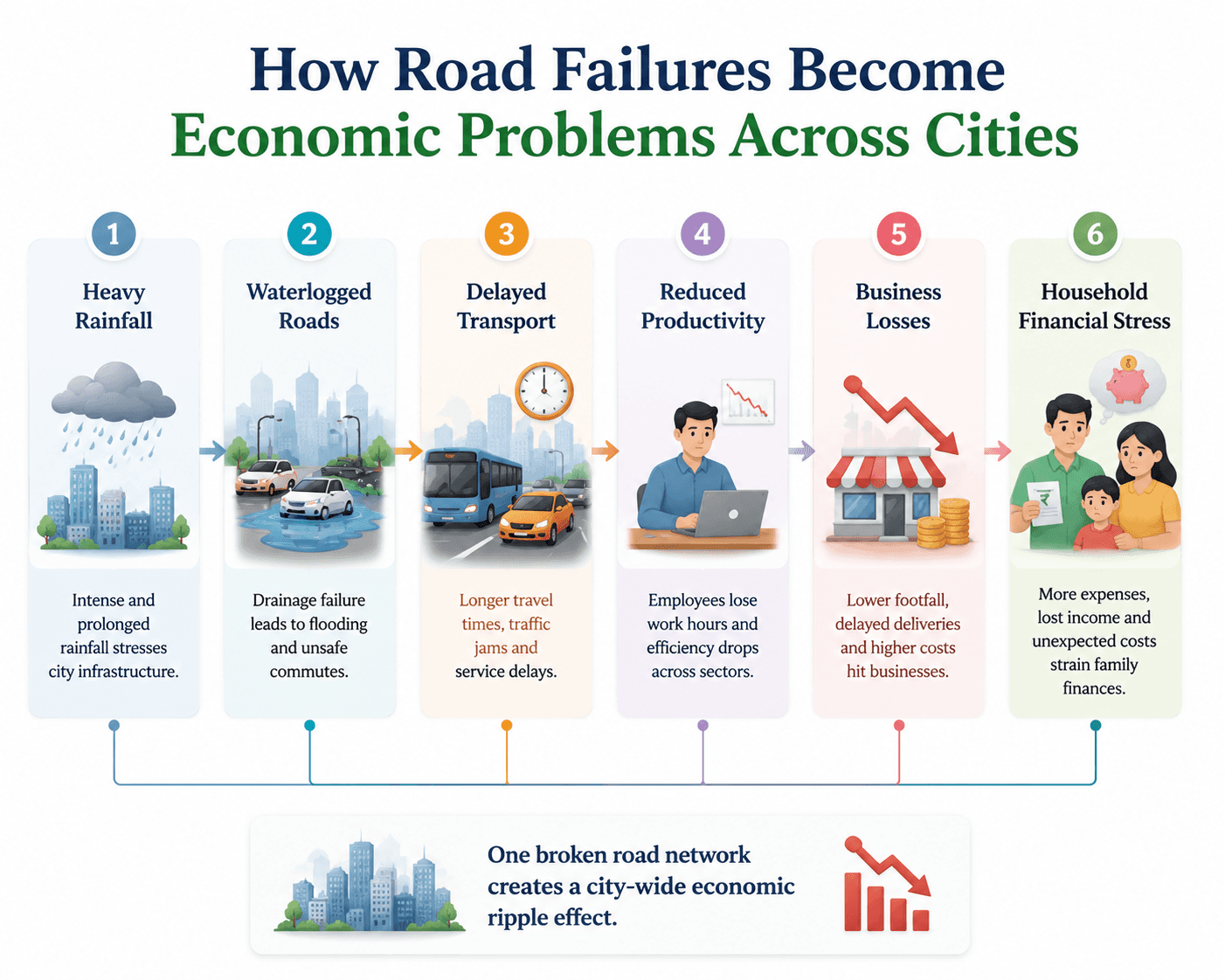
A damaged road may appear to be a local inconvenience, but urban economies function through thousands of connected movements every day.
A delivery vehicle delayed by waterlogging affects customer timelines. A worker stuck in traffic loses productive hours. A business dependent on transport faces higher operating costs. This is called systemic business interruption. It means one small failure creates multiple disruptions across connected systems.
A flooded street is similar to a blockage in a household’s monthly cash flow. The first missed payment may appear manageable, but repeated disruptions eventually create larger financial stress. This is why the economic loss vs insured loss conversation matters at a national level.
When thousands of commuters, delivery workers and businesses experience similar disruptions, cities face productivity losses that are difficult to recover. The cost of bad roads on a household budget is only the first layer. The broader economic impact includes delayed supply chains, higher logistics expenses and reduced business efficiency.
Municipal spending also becomes less effective when repeated repairs replace long-term infrastructure improvements. The result is a cycle where citizens pay through taxes, repairs and lost income while infrastructure problems continue returning every monsoon.
The final question is how households can protect themselves while cities work towards better solutions.
Building a personal finance shield against civic risks
Individuals cannot repair city roads alone, but households can prepare financially for the risks created by urban conditions.
The first step is creating a dedicated monsoon emergency buffer. Traditional emergency funds cover health emergencies and income loss, but urban families should also consider vehicle and infrastructure-related expenses. A separate annual allocation for vehicle maintenance can prevent sudden repair costs from affecting essential savings.
The second step is understanding insurance properly. Families should review vehicle policies before monsoon season begins, check whether flood-related damage is covered and understand exclusions around engine damage. Maintaining photographs, service records and timely documentation can also improve the chances of a smoother claim experience.
The third step is tracking recurring civic problems. If a particular road repeatedly damages vehicles or creates safety risks, documenting incidents through official channels helps create evidence for repair demands.
Personal finance is not only about earning, saving and investing. It is also about reducing unnecessary financial leakage.
Building this financial awareness early requires understanding how everyday decisions affect long-term money goals. Our Personal Finance Handbooks are designed to help students and families develop practical money skills, from budgeting and risk management to making informed financial decisions in real-life situations.
Preparing for the hidden cost of civic infrastructure failure allows families to protect wealth even when external systems remain uncertain.
The bigger lesson is simple. Financial security depends not only on how much money we earn, but also on how effectively we defend it.

Newly Launched

Pockvue Solutions Private Limited
#1, CRE Spacez, 2nd Floor, 14th Main Road,
Sector 5, HSR Layout, Bengaluru - 560102