On a Saturday evening, a mother and her ten-year-old son stop at a grocery store after tuition. The basket has milk, fruit, cereal, and a chocolate bar that was not on the list. At the counter, she scans a UPI code. A confirmation sound plays. They leave.
Her son saw the products enter the bag, but he did not see money leave the family. Later, when he asks to order burgers and his mother says they have spent enough, he looks confused. “But you can just scan again.”
This is the invisible money illusion. Physical cash once gave children a visible sequence. A ₹500 note left the wallet, change returned, and the remaining amount could be counted. Digital money compresses that lesson into a sound and a green tick.
That gap matters when we examine the cashless economy's impact on children. The Reserve Bank of India reported that UPI accounted for nearly 86% of all retail payment transactions in 2025–26, while NPCI data shows that UPI processed approximately 22.72 billion transactions worth ₹28.92 lakh crore in June 2026 alone. Convenience is now part of ordinary family life.
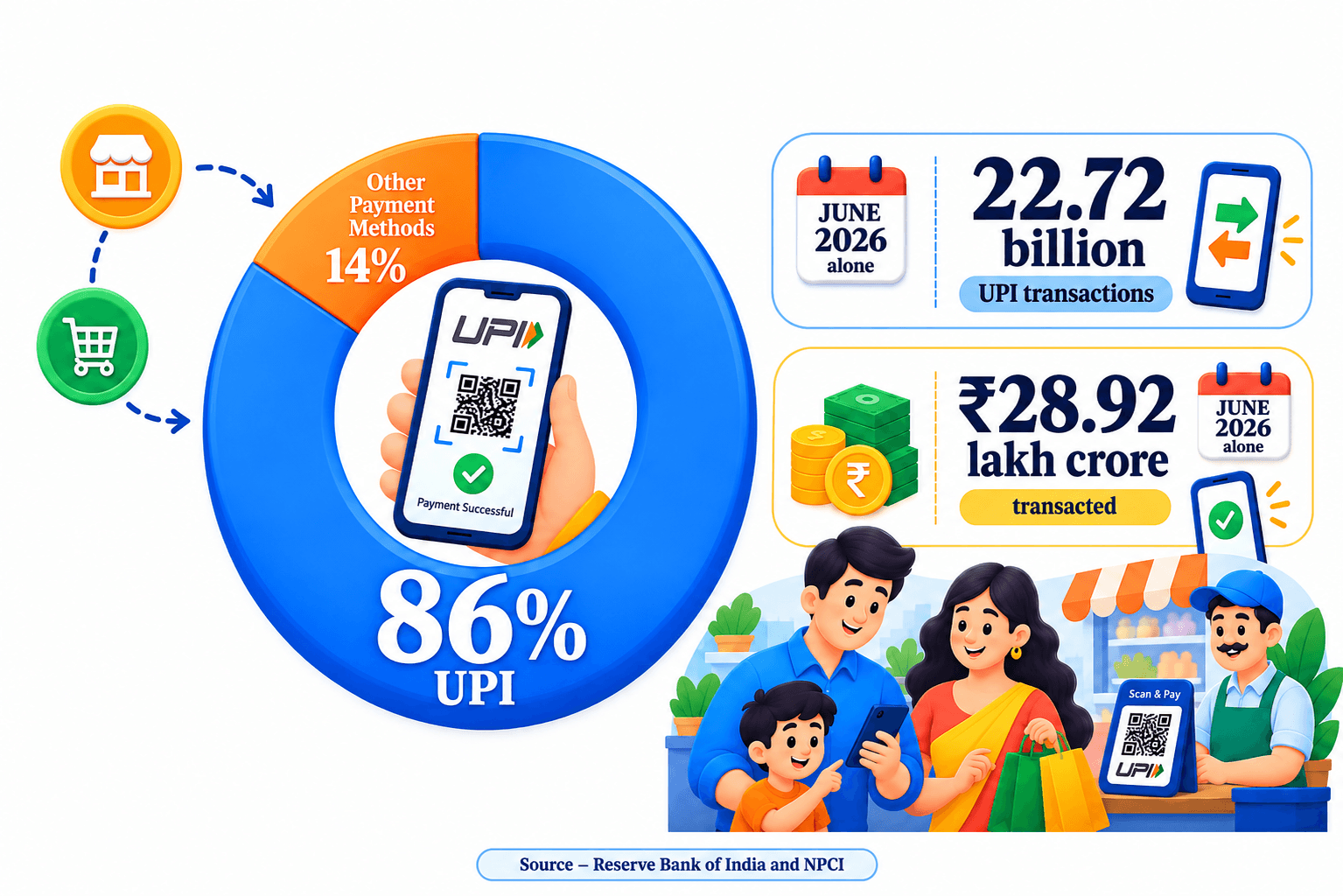
Children often see acquisition without depletion, speed without trade-offs, and approval without the balance supporting it, which leads to a deeper question about what frictionless payments do inside the mind.
Why invisible payments feel painless
Payment friction is the small effort or discomfort involved in completing a purchase. Counting notes, checking a wallet, waiting for change, or deciding whether to break a large note all create natural pauses.
Think of a one-litre water bottle. Every poured glass makes the falling level visible. That resembles cash. Now imagine a tap that produces water whenever you touch it while the tank remains hidden. That resembles frictionless spending. The supply is still limited, but the warning signs disappear.
Digital asset abstraction sounds technical, yet it simply means money becomes a number stored elsewhere rather than an object a child can see, divide, and lose.
Research supports this concern. A study published in the Journal of Economic Behavior and Organization found that faster, less transparent electronic payment methods can reduce the pain of paying and are associated with greater spending. An India-focused study of UPI users similarly found that many participants felt digital payments increased spending because transactions seemed less tangible.
For parents studying Gen Alpha spending habits, the aim is not to make technology frightening. It is to restore the missing pause and show that every “yes” to one purchase is also a “not now” to something else.
Yet today’s children are not merely observing payment systems, because many are already entering financial life earlier than their parents realise.
The 94 percent reality and the reverse mentorship wave
A 2025 Mastercard study conducted by The Harris Poll found that 94% of Gen Alpha children represented in the Asia-Pacific sample had access to some form of financial account. The research covered 19,302 consumers globally, including 9,131 across Asia-Pacific markets such as India. It also found that 47% of Gen Alpha parents said their children had introduced them to digital financial tools they did not previously know about.
Traditionally, parents introduced children to banks, savings, and payments. Today, a child may show a parent how to find a wallet feature, scan a new code, or navigate a payment app. Technical confidence can arrive before financial judgement.
This is why digital financial literacy for kids must mean more than knowing how to transact. A child who can complete a payment is not automatically ready to judge affordability, recognise recurring charges, protect personal data, avoid fraud, or separate a need from a digitally amplified want. Opportunities such as the National Finance Olympiad can further encourage children to apply this understanding to practical financial situations and build stronger decision-making skills.
It is like learning the controls of a car before developing road judgement. Knowing how to accelerate does not mean knowing when to slow down.
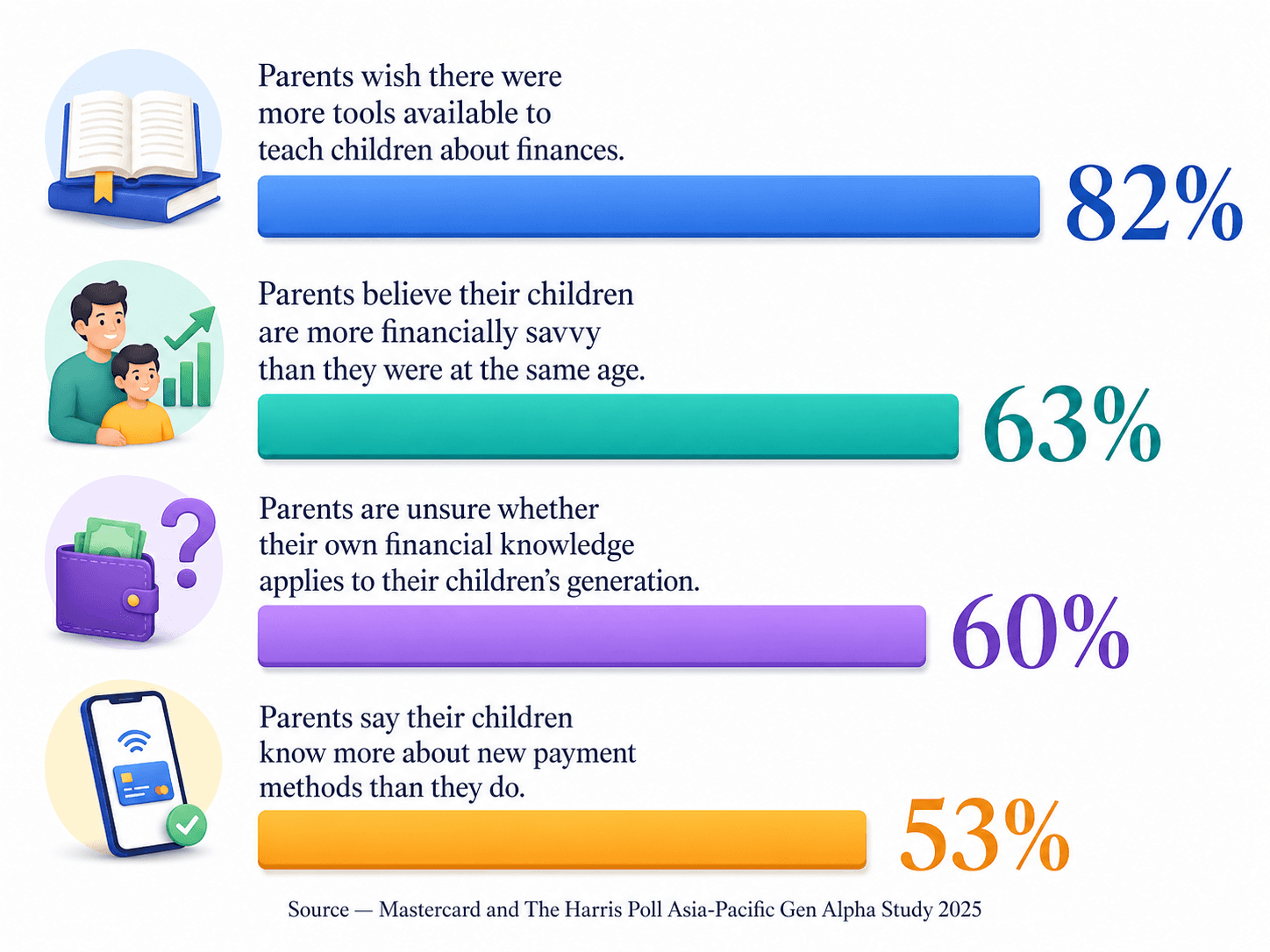
Early account access changes who teaches whom, but the larger household shift appears when children move from learning payment tools to shaping what everyone buys.
How children became everyday household negotiators
A parent opens a quick-commerce app to order bread. A child notices imported chips. Another asks for a bottle used by a creator online. Before checkout, one planned item has become five persuasive additions.
The payment belongs to the parent, but the demand was formed, timed, and reinforced inside a digital environment the child understands well.
A 2026 Rukam Capital and YouGov report found that 66% of Gen Alpha children influence everyday household decisions. Their influence appeared across toys and games, snacks and beverages, clothing, eating out or takeaways, outdoor activities, and learning apps. The research drew on more than 2,000 respondents and included parent and child perspectives.
These findings change how we approach teaching kids about money in India. Parents are not teaching in a neutral environment. Children encounter personalised recommendations, creator endorsements, saved payment details, countdown offers, and delivery promises measured in minutes. This is also why structured resources, such as our Personal Finance Handbooks for children, can help families introduce everyday money concepts in an age-appropriate and practical way.
This does not make children manipulative. It makes them highly exposed consumers with developing impulse control. The report notes that they may wait for the right moment, reason, ask again after refusal, or seek support from another family member.
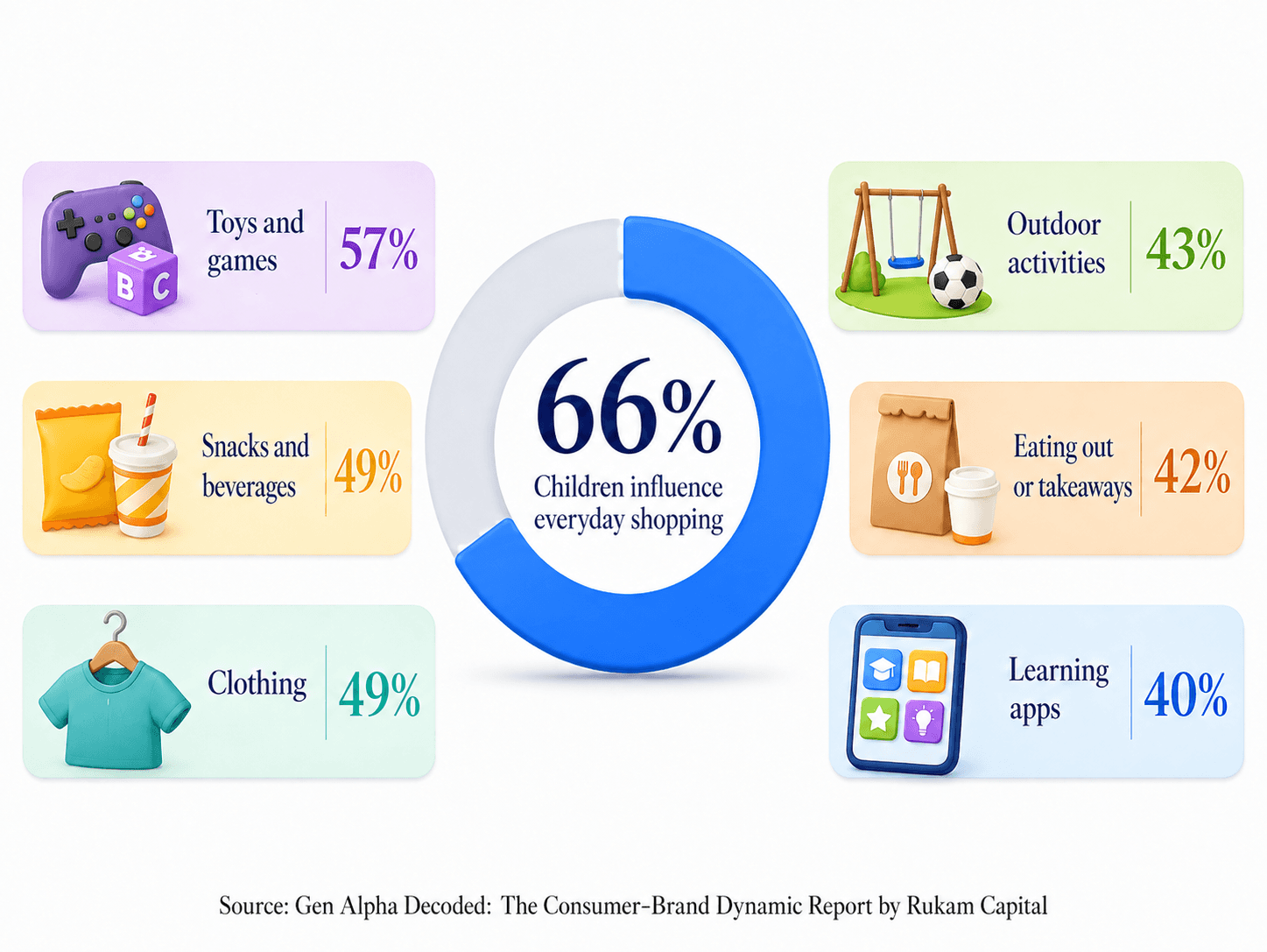
Once influence becomes part of daily shopping, repeated refusals are not enough, and families need a system that makes limits understandable before conflict begins.
How to reinstall financial boundaries in a cashless home
Strong financial boundaries for children should make invisible money visible, connect freedom with responsibility, and allow children to practise decisions while the stakes are small.
Begin with a visible spending window. Before an outing or online order, show the child a fixed discretionary amount. It might be ₹500 for snacks and entertainment. Let them see the number before the first purchase and subtract each expense together. You are not revealing the family’s full bank balance. You are creating a clear container for one set of choices.
Next, use a digital envelope system. Divide allowance into spending, saving, giving, and a longer-term goal. This can be recorded on paper, in a spreadsheet, or through age-appropriate digital pocket money apps with parental controls. The important rule is that money assigned to one purpose cannot quietly be borrowed from another.
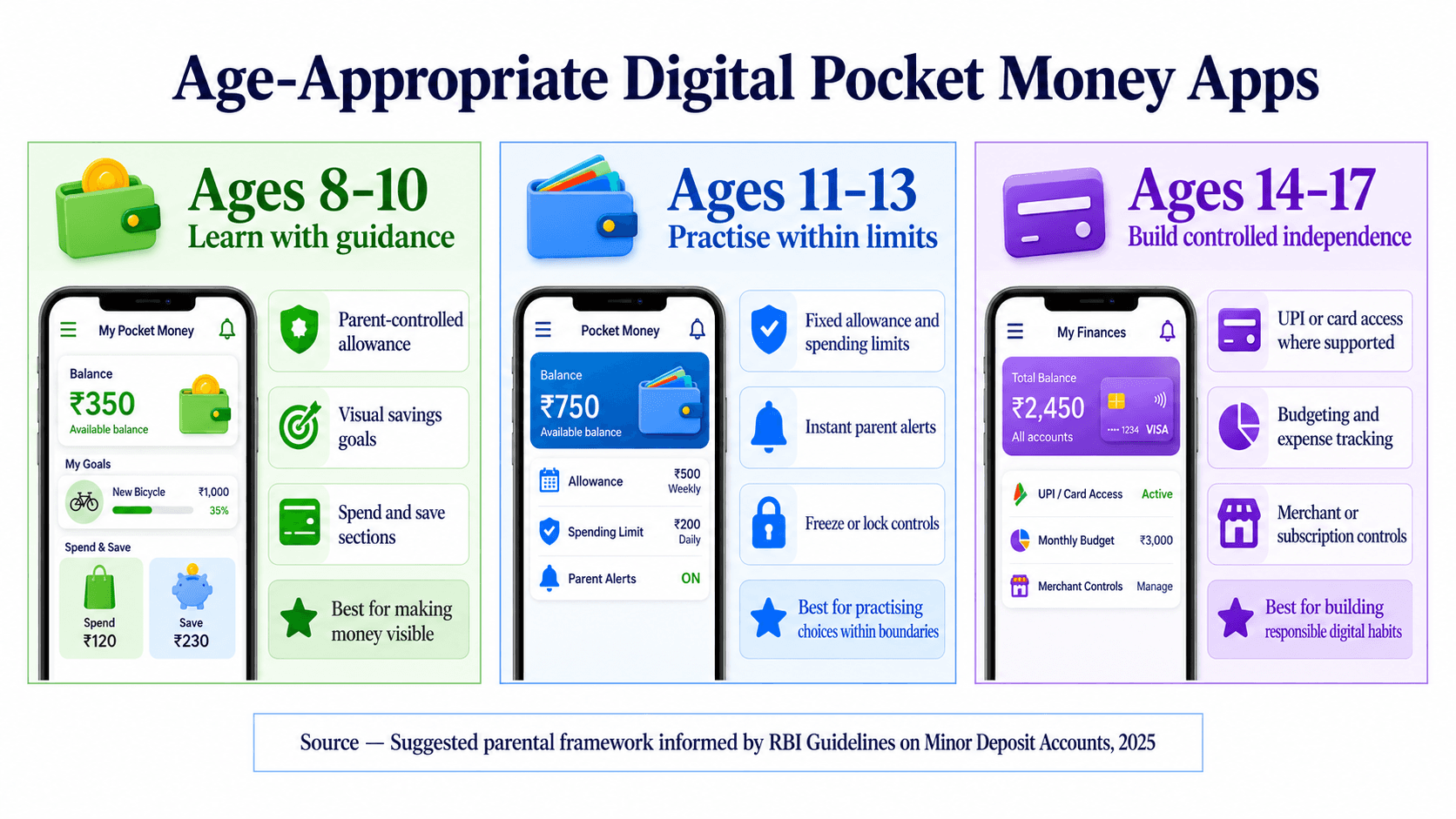
Connect digital allowance to contribution instead of repeated requests. Agree in advance on suitable responsibilities, the amount earned, and the payment day. This helps a child connect money with effort, planning, and waiting rather than persuasion.
Add a pause for unplanned purchases. Use ten minutes for small wants and twenty-four hours for larger ones. Ask three questions. What problem does this solve? What will you give up from your available amount? Will you still value it after waiting? These questions rebuild payment friction without abandoning digital payments.
Finally, hold a five-minute weekly review. Look at what was spent, saved, regretted, and moved closer to a goal. Avoid lectures. “What surprised you?” creates more learning than “Why did you waste this?”
This is practical digital financial literacy for kids. Children need protected opportunities to make small mistakes, experience consequences, and try again. Controls can loosen as judgement improves.
The framework becomes even more effective when parents treat digital independence as a staircase rather than a single permission granted at a certain age.
What responsible digital independence can look like
At the first stage, the child observes. The parent says the price aloud, shows the relevant spending limit, and explains what remains after payment.
At the second stage, the child chooses within a fixed amount. They may compare two products, select one snack, or decide whether to spend today or save for the weekend.
At the third stage, the child manages a controlled digital allowance. Spending alerts remain active, merchant categories may be limited, and transactions are reviewed together.
At the fourth stage, the child plans across time. They save for a larger goal, notice subscriptions, question discounts, protect PINs and personal data, and understand that convenience does not remove cost.
This staged approach responds to the impact of cashless economy on children while preserving the benefits of digital payments. It also strengthens teaching kids about money in India because it fits the reality families already live in. Parents do not need to reject UPI, quick commerce, or youth finance tools. They need to place visible decisions around them.
The most protective sentence is not simply “We cannot afford it.” It is “Here is the amount available, and here are the choices it can support.” That replaces mystery with participation.
The next QR scan may take only seconds, but what your child learns from it can shape years of financial behaviour.

Newly Launched

Pockvue Solutions Private Limited
#1, CRE Spacez, 2nd Floor, 14th Main Road,
Sector 5, HSR Layout, Bengaluru - 560102