In today’s fast-changing financial world, a new player has emerged as a game-changer for businesses: private credit. As traditional banks tighten their lending rules, private credit funds are stepping in to provide much-needed financing to companies of all sizes. This growing trend is reshaping how businesses access funds, but it’s also raising eyebrows among regulators due to its less-transparent nature. In this blog, we’ll break down what private credit is, why it’s booming, and what it means for businesses, the economy, and the public.
What is private credit?
Private credit refers to loans or financing provided by non-bank lenders, such as private credit funds, asset managers, or institutional groups, directly to businesses or projects. Unlike bank loans or bonds traded on public markets, private credit deals are negotiated privately and tailored to the borrower’s needs. These loans are not openly traded, which makes them less flexible but allows for more customised terms.

Private credit comes in various forms, including:
Direct lending: Loans to mid-sized or large companies to support growth, acquisitions, or day-to-day operations.
Distressed debt: Financing for companies in financial trouble, aimed at helping them recover.
Mezzanine financing: A mix of debt and equity financing, often used for specific business needs.
Special situations: Funding for unique scenarios, like business turnarounds or event-driven opportunities.
This flexibility makes private credit a lifeline for businesses that might not qualify for traditional bank loans or need financing that fits their unique situation.
Why is private credit booming?
The rise of private credit is no accident—it’s driven by major shifts in the global financial landscape. Here’s why this trend is gaining momentum:

Banks are lending less: Banks have become more cautious due to economic uncertainties, rising interest rates, and stricter regulations. Since the 2008 global financial crisis, banks face tougher rules on how much risk they can take, making it harder for some businesses—especially small and medium enterprises (SMEs) or those in riskier industries—to secure loans. Private credit funds have filled this gap, offering financing to businesses banks might overlook.
Businesses need flexible financing: Many companies, from startups to established firms, need financing that’s tailored to their goals, whether it’s expanding operations, investing in technology, or entering new markets. Private credit provides customised solutions, such as longer repayment periods or agreements with fewer restrictions, which banks often can’t match.
Growth of private equity: Private equity firms, which buy and grow companies, are increasingly turning to private credit to finance their deals. This has fuelled demand for private credit, as businesses acquired by private equity often need quick, flexible funding to scale or restructure.
Economic uncertainty: Global challenges like inflation, geopolitical tensions, and fluctuating commodity prices have made banks more risk-averse. Private credit funds, however, are often more willing to lend in uncertain times, as they can carefully assess risks and structure deals to protect their interests while supporting businesses.
Filling the gap for SMEs: Small and medium enterprises, which are vital to economic growth, often struggle to access bank loans due to strict criteria or lack of collateral. Private credit funds are stepping in to provide these businesses with the capital they need to thrive, supporting job creation and innovation.
How private credit impacts businesses
Private credit is transforming how businesses operate by providing an alternative to traditional financing. Here’s how it’s making a difference:
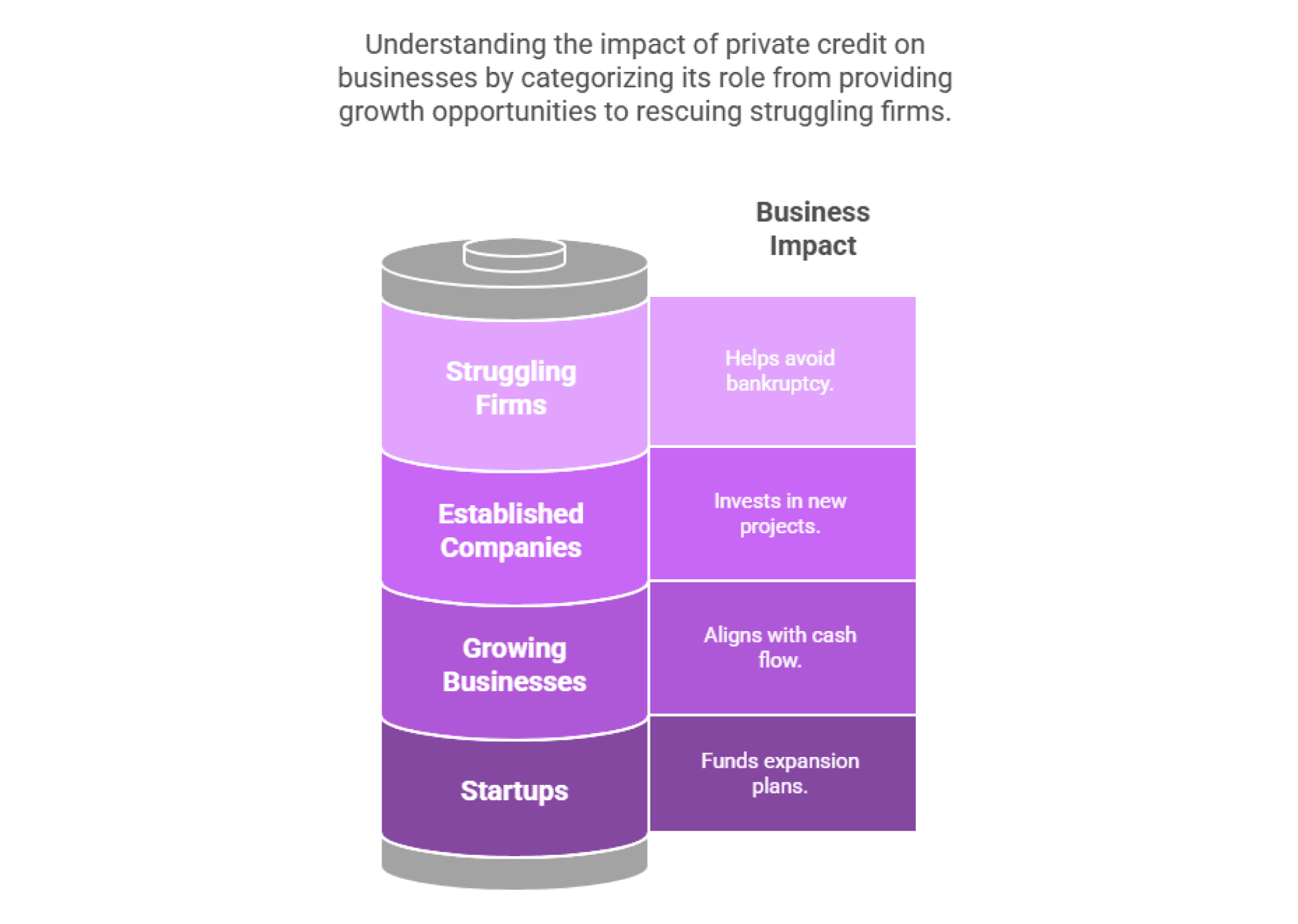
Access to capital: Companies that don’t meet bank lending standards, such as startups or firms in high-growth sectors like technology or healthcare, can tap into private credit to fund their plans.
Customised solutions: Private credit offers terms that align with a business’s cash flow or growth trajectory, such as deferred payments or flexible repayment schedules.
Support for growth: Businesses can use private credit to invest in new projects, hire talent, or expand into new markets without giving up ownership, unlike equity financing.
Rescue for struggling firms: Companies facing financial challenges can use private credit to restructure or stabilise, helping them avoid bankruptcy and protect jobs.
Private credit and the economy
The private credit boom isn’t just about individual businesses; it has broader implications for the economy and society. Here’s what it means for the public:
Job creation: By providing capital to businesses, private credit supports expansion and innovation, which can lead to more jobs and economic activity.
Support for SMEs: Small and medium enterprises are often the backbone of local economies. Private credit helps these businesses survive and grow, boosting regional development.
Economic resilience: In times of economic uncertainty, private credit acts as a buffer, ensuring businesses have access to funds when banks pull back, helping to stabilise the economy.
Innovation and progress: Companies in sectors like technology, renewable energy, or healthcare can use private credit to fund cutting-edge projects, driving advancements that benefit society.
However, the rise of private credit also comes with challenges that affect the broader economy.
The risks and concerns
While private credit is a boon for businesses, its rapid growth has raised concerns among regulators and experts. Here are the key issues:

Lack of transparency: Private credit operates outside public markets, meaning there’s less visibility into loan terms, borrower financials, or fund performance. This opacity makes it harder for regulators to monitor risks.
Potential for defaults: If businesses struggle to repay their loans—especially during an economic downturn—it could lead to losses for private credit funds, potentially impacting the financial system.
Regulatory scrutiny: The private credit market, now worth over $1.5 trillion globally, is under the regulatory spotlight. Concerns include the quality of lending standards, the use of borrowed money to boost returns, and ties to banks and other financial institutions. Regulators may introduce new rules to address these risks, which could affect how private credit operates.
Rising interest rates: As central banks raise interest rates to tackle inflation, borrowing costs are climbing. This could make it harder for businesses to repay private credit loans, especially for those with weaker finances.
Systemic risks: If a large number of borrowers default or private credit funds face losses, it could create ripple effects across the financial system, affecting banks, insurers, and other institutions connected to the market.
What’s next for private credit?
The private credit market is expected to keep growing as businesses continue to seek alternative financing and banks remain cautious. However, its future will depend on several factors:
Economic conditions: A stable economy will support private credit’s growth, while a downturn could test the market’s resilience.
Regulatory changes: New rules could enhance transparency and stability but might also limit the market’s flexibility.
Innovation in financing: Private credit funds may develop new ways to serve businesses, such as financing for green projects or digital transformation.
For the public, the private credit boom is a sign of a shifting financial landscape—one where businesses have more options to grow but where risks need careful management to protect the economy.
The private credit boom is reshaping how businesses access financing, offering a vital lifeline for companies when traditional banks say no. Its flexibility and ability to support growth are driving economic activity, creating jobs, and fostering innovation. However, the market’s lack of transparency and potential risks have caught the attention of regulators, who are watching closely to ensure stability. As private credit continues to evolve, it’s worth understanding its impact on businesses and the economy.
As private credit continues to grow, how do you think it will impact businesses and the economy in the long run?

Newly Launched


Pockvue Solutions Private Limited
#1, CRE Spacez, 2nd Floor, 14th Main Road,
Sector 5, HSR Layout, Bengaluru - 560102