

In August 2025, the United States imposed an additional 25% tariff on select Indian imports, raising the total tariff rate to 50% for affected goods. This unprecedented tariff level is the highest the US has applied to India or any other trading partner. The move is linked to geopolitical tensions, specifically India’s continued purchase of Russian oil, and carries significant implications for India’s export sector, bilateral trade relations, and broader economic outlook.
What triggered the 50% tariff hike?
The US government justified the extra tariff as a response to India’s ongoing imports of Russian oil, which Washington views as indirectly supporting Russia’s war efforts in Ukraine. This tariff hike is intended as a punitive measure to pressure India into reducing these purchases and align more closely with US foreign policy interests.
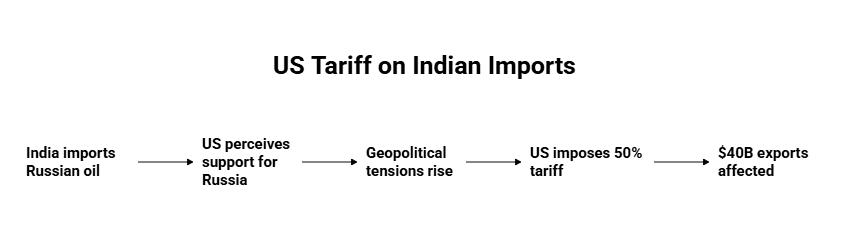
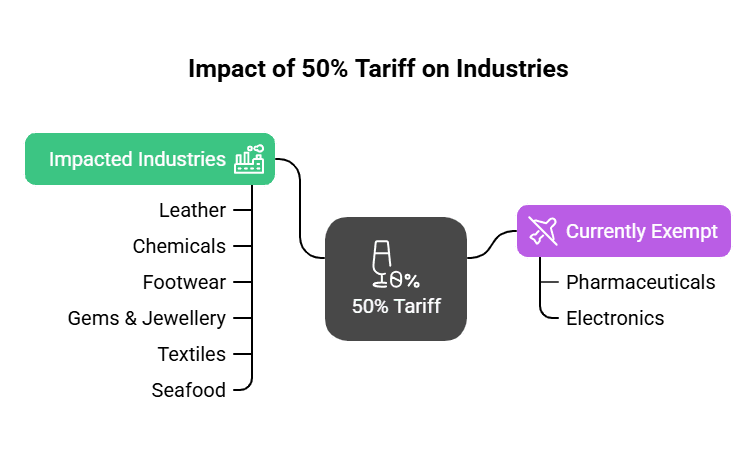
According to official estimates, the additional tariff affects about $40 billion worth of Indian exports to the US, constituting roughly 4.8% of India’s total goods and services exports. Key sectors impacted include leather, chemicals, footwear, gems and jewellery, textiles, and seafood, although some industries like pharmaceuticals and electronics currently remain exempted.
Financial impact on India’s export sector
A 50% tariff makes Indian goods substantially more expensive in the US market, potentially leading to:
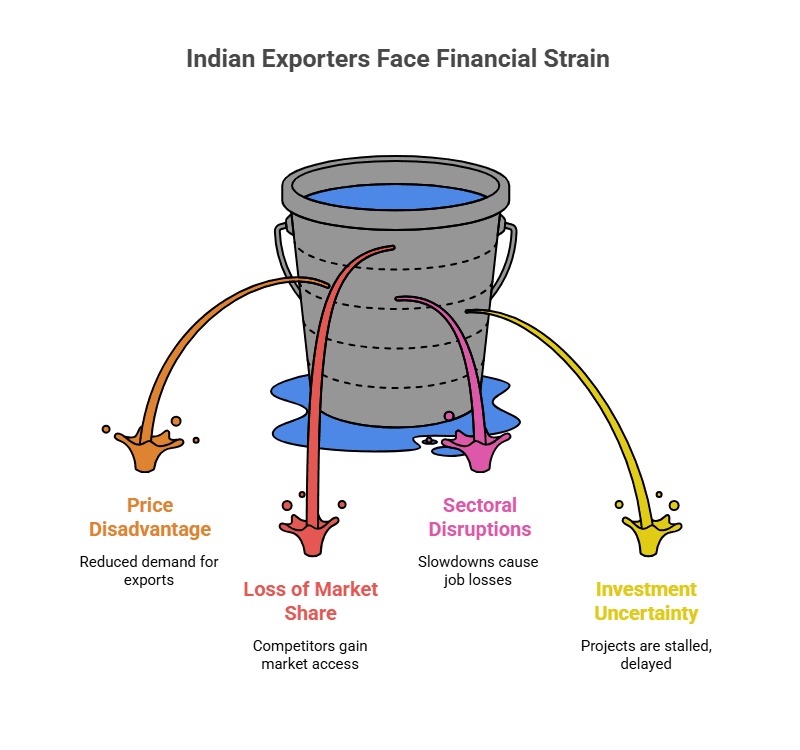
Price disadvantage: Exporters may have to absorb tariff costs or raise prices for US buyers, risking reduced demand.
Loss of market share: Competitors like Vietnam and Bangladesh with lower US tariffs may attract buyers seeking cheaper alternatives.
Sectoral disruptions: Affected industries might see decline in exports, production slowdowns, and possible job losses.
Investment uncertainty: Unpredictable trade barriers can stall new investments and expansion plans in export-oriented sectors.
Despite these challenges, India’s diversified export base and strong domestic demand provide some resilience against these shocks.
Broader economic and trade relations effects
The tariff increase strains the US-India economic relationship, which has been generally positive but now faces setbacks due to these developments.
Trade negotiations: The tariff pressure encourages India to consider negotiating a comprehensive trade deal that could involve commitments to reduce Russian oil imports.
Investor sentiment: Heightened tensions may deter foreign direct investment or delay large-scale projects involving US partners.
Export diversification: India may accelerate efforts to expand trade with other regions such as Europe, ASEAN, Africa, and Latin America to reduce dependence on the US market.
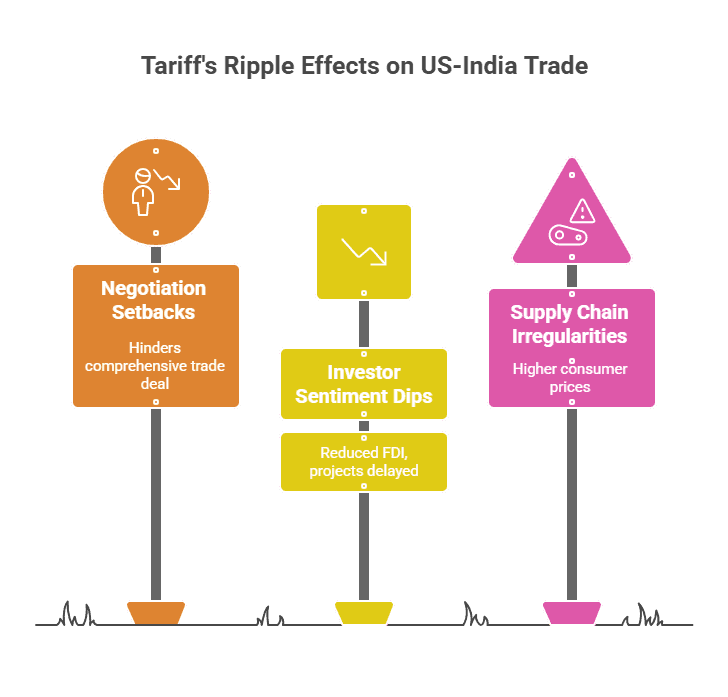
Meanwhile, the US domestic economy could also face consequences such as supply chain irregularities and higher prices for consumers.
Financial outlook and possible mitigations for India
Experts suggest that:
India should seek diplomatic relief or exemptions to limit tariff impacts.
Enhancing export competitiveness through quality improvements and branding could help offset tariff costs.
Accelerating diversification of export markets is wise to spread risk.
Government support for affected sectors with subsidies or infrastructure upgrades can alleviate pressures.
India’s exports crossed $820 billion in 2024-25, reflecting durability, but these tariffs highlight the need for policy agility amid geopolitical uncertainties.
What should exporters and investors watch?
Companies should:
Monitor tariff updates and compliance carefully.
Adjust pricing and market strategies to sustain competitiveness.
Consider alternate markets or product diversification.
Assess supply chain flexibility and risk management plans.
Investors should evaluate exposure to sectors vulnerable to US tariffs and may anticipate margin pressures accordingly.
A challenging juncture for US-India trade in 2025
The 50% US tariff imposed on Indian goods intensifies trade tensions rooted in geopolitical disputes, especially India’s energy ties with Russia. While posing significant financial challenges, the action also prompts India to pursue deeper reforms, market diversification, and enhanced export strategies.
Mitigating the tariff’s impact will require coordinated efforts among policymakers, industries, and diplomatic channels. With a pragmatic approach, India can navigate this period to sustain export growth and strengthen global economic partnerships.
Curious about how this tariff hike might affect your business or investments?

Newly Launched


Pockvue Solutions Private Limited
#1, CRE Spacez, 2nd Floor, 14th Main Road,
Sector 5, HSR Layout, Bengaluru - 560102