

Ever wondered why your favourite gadgets get cheaper or more expensive overnight? It’s not magic. It’s trade policy. And it affects your wallet more than you think.
Trade policies are the rules and agreements that govern how countries exchange goods and services. From tariffs on imported cars to free trade deals with neighbouring nations, these policies impact prices, jobs, and even the environment. This blog dives into the wide-ranging effects of trade policies, with examples relevant to our daily lives, exploring their economic, social, environmental, and political consequences.
Understanding trade policy
Trade policy includes measures like:
Tariffs: Taxes on imported or exported goods, like duties on foreign electronics.
Quotas: Caps on how much of a product, say rice or textiles, can be imported.
Subsidies: Government support for local industries, such as farmers or manufacturers.
Trade agreements: Deals to ease trade, like the Regional Comprehensive Economic Partnership (RCEP).
Sanctions: Bans on trade with certain countries for political reasons.
Let’s explore how these policies affect various aspects of life.

Economic impacts
Trade policies directly influence our wallets, industries, and economic growth.
Prices and product choices: High tariffs on imported goods, like smartphones or clothing, can make them costlier. For example, duties on electronics often raise prices for consumers. On the other hand, trade agreements that lower tariffs, like those with ASEAN nations, make imported goods cheaper and increase variety in markets, from Thai rice to Malaysian gadgets.
Local businesses: Protective policies, such as tariffs on foreign steel, help local manufacturers compete but may increase costs for industries like construction that rely on cheap inputs. Subsidies for farmers, like those for sugarcane, boost rural economies but can strain government budgets. Meanwhile, open trade policies expose local textile industries to competition from countries like Bangladesh, pushing firms to innovate or risk losing market share.
Supply chains: Trade policies shape how goods move globally. Recent global trade tensions have led companies to shift manufacturing to countries like Vietnam, affecting supply chains for electronics and garments. Delays or higher costs from restrictive policies can lead to shortages or price hikes for everyday items like medicines or auto parts.
Economic growth: Open trade has fuelled growth in export-driven sectors like IT services and pharmaceuticals, creating millions of jobs. The World Bank notes that trade liberalisation since the 1990s lifted many out of poverty in developing economies. However, over-reliance on imports can hurt local industries, as seen in debates over cheap Chinese goods flooding markets.

Social impacts
Trade policies shape communities, jobs, and even culture.
Jobs: Export growth in sectors like gems, jewellery, or software has created jobs, especially in cities. But cheap imports can threaten jobs in traditional industries like handloom weaving or small-scale manufacturing. For instance, competition from imported ceramics has challenged artisans in regions known for pottery.
Income gaps: Trade can widen inequality. Skilled workers in tech or pharma benefit from global demand, but farmers or factory workers competing with cheap imports may face lower wages. Agricultural trade liberalisation, for example, has boosted mango exports but hurt small farmers unable to compete with subsidised foreign produce.
Cultural exchange: Trade brings global products and ideas, from Korean skincare to Hollywood films, enriching urban lifestyles. Food imports like avocados or quinoa are now supermarket staples. However, some worry that foreign brands, like fast-food chains, dilute local traditions, sparking debates over cultural identity in smaller towns.

Environmental impacts
Trade policies have a growing influence on the environment, critical as sustainability becomes a priority.
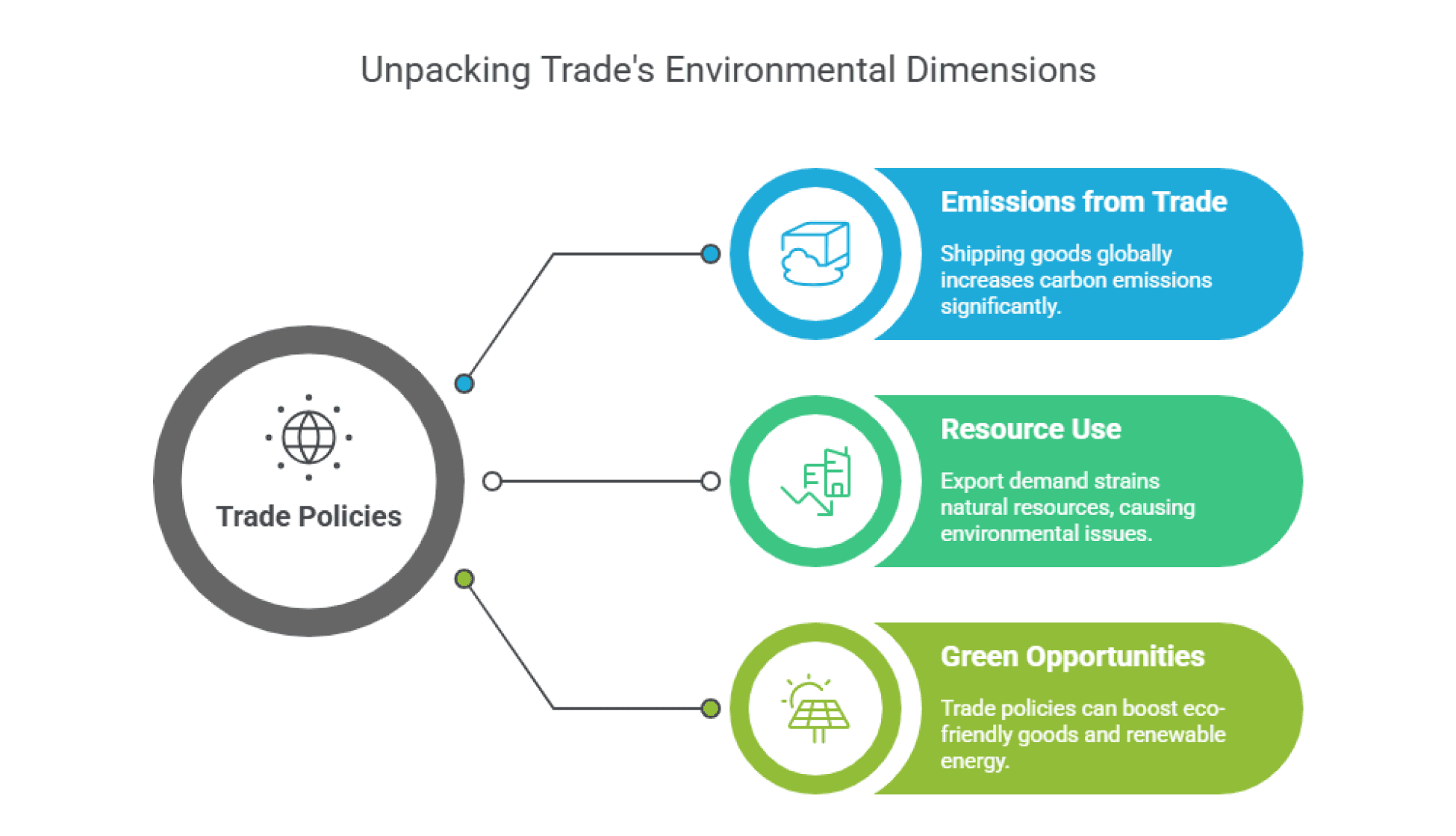
Emissions from trade: Shipping goods across continents, like importing Australian coal or exporting spices, generates carbon emissions. Policies promoting local production could cut this footprint but risk raising costs. For example, reliance on imported oil impacts both the environment and energy security.
Resource use: Demand for exports like cotton or seafood can strain natural resources. Overfishing for shrimp exports or water-intensive cotton farming for textiles has raised environmental concerns. Trade agreements with green clauses, like those in recent EU deals, push for sustainable practices but are hard to enforce.
Green opportunities: Trade policies can promote eco-friendly goods. For instance, lower tariffs on solar panels have made renewable energy more affordable, boosting adoption in rural areas. Yet, weak regulations in some trade partners allow cheap, polluting goods to undercut sustainable local products.
Political impacts
Trade policies are as much about politics as economics, influencing both domestic and global relations.
International ties: Trade deals, like those with Japan or Australia, strengthen diplomatic bonds and open markets for goods like basmati rice or leather. Sanctions or trade curbs, such as those on certain tech imports, signal political stances but can disrupt industries reliant on foreign components.
Domestic debates: Trade policies spark local debates. Farmers often protest against trade deals that allow cheap agricultural imports, fearing losses. Meanwhile, urban consumers and exporters push for open markets. These tensions shape political campaigns, with leaders balancing rural and urban interests.
Global rules: Trade policies influence global bodies like the WTO. Disputes over subsidies for farmers or tariffs on steel highlight tensions between nations. Regional deals, like RCEP, aim to streamline trade but face challenges in aligning diverse economies.

Real-world examples
Tariffs on chinese goods
In recent years, high tariffs on Chinese electronics and machinery aimed to boost local manufacturing. Impacts included:
Economic: Higher prices for gadgets; growth in domestic brands.
Social: Job creation in manufacturing hubs but costlier goods for consumers.
Political: Strengthened the “self-reliance” narrative but strained trade ties.
RCEP Agreement (2020)
This trade deal with 15 Asia-Pacific nations lowered tariffs on goods like textiles and electronics. Impacts include:
Economic: Boosted exports of spices and garments but increased competition for local producers.
Environmental: Risks over-extraction of resources like fish stocks.
Political: Strengthened regional ties but sparked concerns over import surges.
Navigating trade policy challenges and opportunities
Crafting effective trade policies is tough. Key challenges include:
Protecting farmers and artisans while accessing global markets.
Ensuring trade benefits reach rural and low-skill workers.
Promoting green trade without hurting economic growth.
Navigating tensions, like the U.S.-China rivalry, that disrupt trade flows.
The future lies in digital trade (e.g., e-commerce rules) and green policies, like carbon tariffs. Moves toward “self-reliance” and regional trade blocs will shape how goods and services flow. Trade policies touch every part of life—from the price of your phone to the jobs in your city. They can drive prosperity, create challenges, or spark debates. As global trade evolves, policies must balance economic growth, social equity, and environmental care.
Trade policies shape the world you live in — learn how, question why, and never stop asking who it really benefits.
Follow for more insights that make economics personal.

Newly Launched


Pockvue Solutions Private Limited
#1, CRE Spacez, 2nd Floor, 14th Main Road,
Sector 5, HSR Layout, Bengaluru - 560102