Have you ever found yourself scrolling through Flipkart or Amazon, only to end up with a cart full of items you didn’t need? Maybe it was a kurta “on sale,” a skincare combo you couldn’t resist, or a tech gadget that seemed like a steal. You’re not alone. Impulse buying isn’t just a lack of discipline—it’s a carefully orchestrated psychological game that retailers play to make your brain say “yes” before your wallet can say “no.” In this blog, we’ll dive deep into the psychology behind impulse purchases, how brands like Flipkart, Amazon, and Myntra exploit it, and practical ways to outsmart your brain to save your hard-earned money.
Why you can’t resist that sale
Every time you browse an e-commerce app like Flipkart or Amazon, your brain is working against you. The moment you see a flashy banner screaming “70% OFF” or a red tag saying “Only 3 Left in Stock,” your brain releases dopamine, the neurotransmitter associated with pleasure and anticipation. This chemical rush isn’t triggered by the product itself but by the promise of a reward. Retailers know this and design their platforms to keep you hooked.
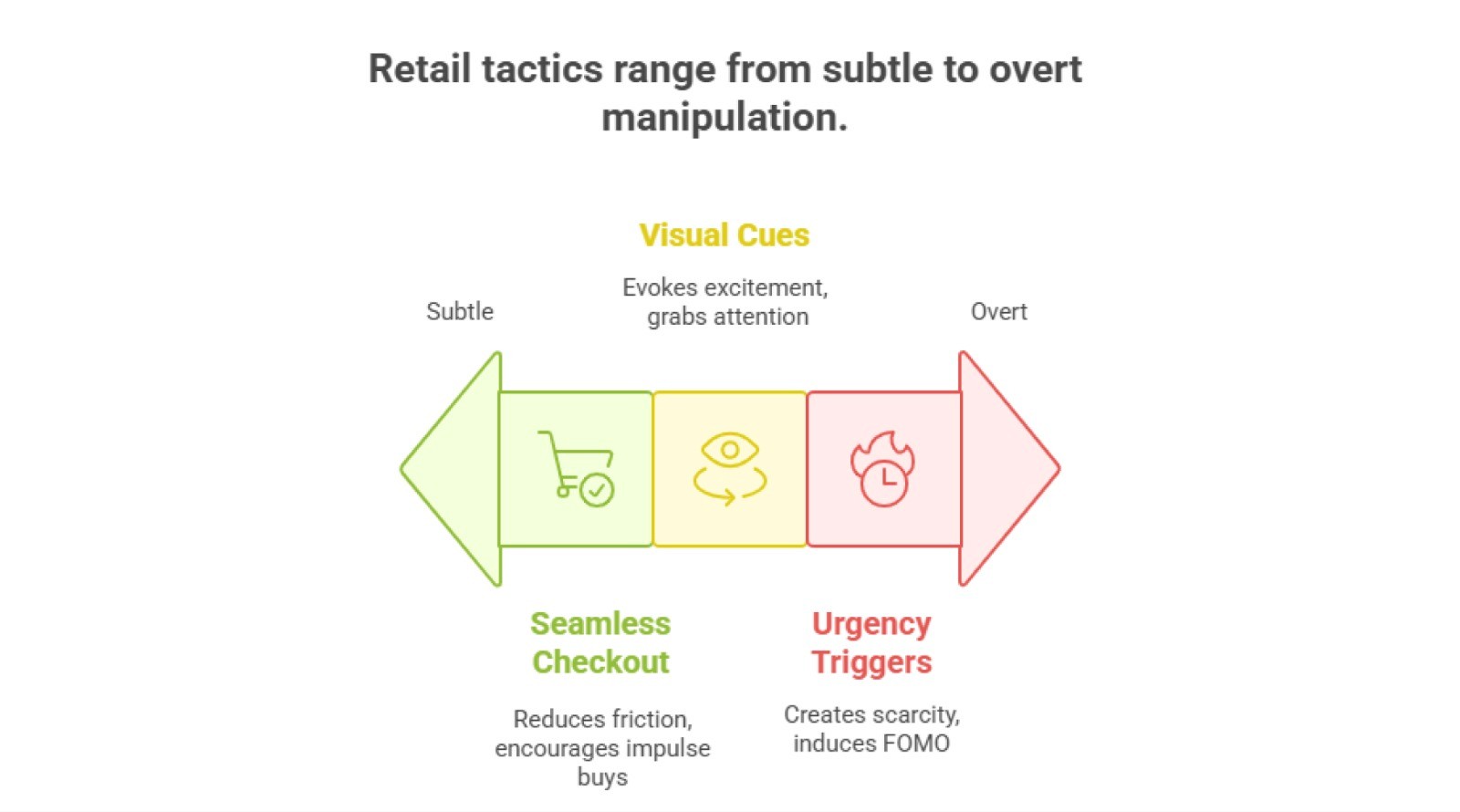
Here’s how they do it:
Urgency triggers: Countdown timers, “limited-time offers,” and “low stock” alerts create a sense of scarcity. These tactics tap into your fear of missing out (FOMO), making you feel like you’ll lose a golden opportunity if you don’t act immediately.
Visual cues: Warm colours like red and orange dominate sale banners because they evoke excitement and urgency. Subtle design choices, like bold fonts or flashing animations, grab your attention and keep you clicking.
Seamless checkout: One-click purchases and saved payment methods reduce friction, giving you no time to second-guess your decision. Before you know it, you’ve spent ₹2,000 on something you didn’t plan to buy.
These elements work together to override your rational thinking, blurring the line between a want and a need. Retailers aren’t just selling products; they’re selling emotions, and your brain is their playground.
What makes you spend more
Beyond apps and websites, your social media feed significantly influences your spending habits. Platforms like Instagram, Facebook, and TikTok are flooded with influencer hauls, unboxing videos, and posts claiming “just got this from Myntra,” which tap directly into the powerful psychological trigger known as FOMO—Fear of Missing Out. When you see others showcasing the latest deals, exclusive launches, or trendy products, it creates a sense of urgency and scarcity, making you feel like you’re missing out on something valuable or socially relevant.
This emotional nudge transforms what might have been a casual desire into a perceived necessity. Suddenly, a ₹999 kurta or a ₹1,500 speaker doesn’t just seem like a luxury or an impulse buy—it feels like an essential purchase to keep up with your peers or social circles. The seamless integration of one-click checkouts and saved payment details further accelerates this process, reducing the time you have to reflect on whether you really need the item. The frictionless buying experience is deliberately designed to capitalise on these split-second decisions.

Moreover, these platforms blur the line between content and commerce. Shopping is no longer confined to dedicated e-commerce sites; it’s embedded within your social interactions and entertainment. What starts as a brief scroll to relax or catch up on friends’ updates can quickly morph into a shopping spree, ending with a payment confirmation before you even realise it.
Over time, the social validation you gain from likes, comments, and shares becomes a reward in itself, sometimes even more compelling than the product you purchased. The dopamine hit from positive social feedback reinforces the buying behaviour, conditioning you to associate shopping with social acceptance and personal happiness. This cycle makes it harder to distinguish between genuine needs and socially driven wants, ultimately driving higher spending fuelled by emotional and social factors rather than rational decisions.
How one impulse buy can break the bank
A single ₹2,000 buy may not feel like a big deal. But the truth is, sales don’t just come once. Two or three small purchases each month, and suddenly, you're down ₹6,000–₹10,000 without realising it.
During a casual scrolling break on Instagram, a “70% off” notification popped up and caught my eye, and it started from there. I added a ₹1,999 kurta to my cart, thinking it’s just one item. Then I thought, “Might as well get the heels too—they’re ₹899, and I’ll need them eventually.” I threw in a lipstick for ₹499 and checked out.
A week later, the parcel arrived, and half the stuff didn’t feel as exciting as it did online. But the damage was done: ₹3,400 gone, just like that. The worst part? I did the same thing the next month during another sale.
At the end of the quarter, I checked my statements and realised I’d spent over ₹9,000 on things I didn’t plan for. It hit me how fast small, “harmless” buys can spiral—especially when they’re driven by deals, not needs.
Practical tips to avoid impulse buys
The good news? You don’t have to quit shopping altogether to avoid falling into the impulse-buying trap. With a little awareness and some simple strategies, you can take control of your spending. Here are five practical hacks to outsmart your brain:
Wait 24 hours: Before hitting “Buy Now,” give yourself a 24-hour cooling-off period. This lets the initial dopamine rush fade, giving you time to decide if you really need the item. More often than not, you’ll realise you don’t.
Unsubscribe from temptation: Sale emails and push notifications are designed to keep you in the buying loop. Unsubscribe from promotional emails and turn off app notifications to reduce the constant urge to shop.
Use a wishlist: Instead of buying on impulse, add items to a wishlist and revisit them later. You’ll often find that the excitement wears off, and you no longer want the item.
Set a budget for treats: Allocate a small monthly budget for impulse purchases. This lets you enjoy the occasional treat without derailing your finances.
Track your spending: Keep a record of every purchase you make, no matter how small. Seeing the numbers add up can be a wake-up call and help you stay mindful of your habits.
By adopting these habits, you can enjoy shopping without letting retailers manipulate your emotions. Start small, stay consistent, and watch your savings grow.
Impulse buying is a psychological trap, but it’s not unbeatable. Retailers like Flipkart, Amazon, and Myntra are experts at exploiting your brain’s wiring, using urgency, FOMO, and clever design to make you spend. But with awareness and a few practical strategies, you can outsmart the system and make intentional choices about where your money goes.
Next time you’re tempted by a “limited-time deal” or an influencer’s haul, pause and ask yourself: Do I need this, or is my brain just chasing a dopamine hit? By staying mindful, you can enjoy shopping without the regret of unnecessary purchases.
What’s your biggest impulse buy story? Tell us in the comments below!

Newly Launched


Pockvue Solutions Private Limited
#1, CRE Spacez, 2nd Floor, 14th Main Road,
Sector 5, HSR Layout, Bengaluru - 560102