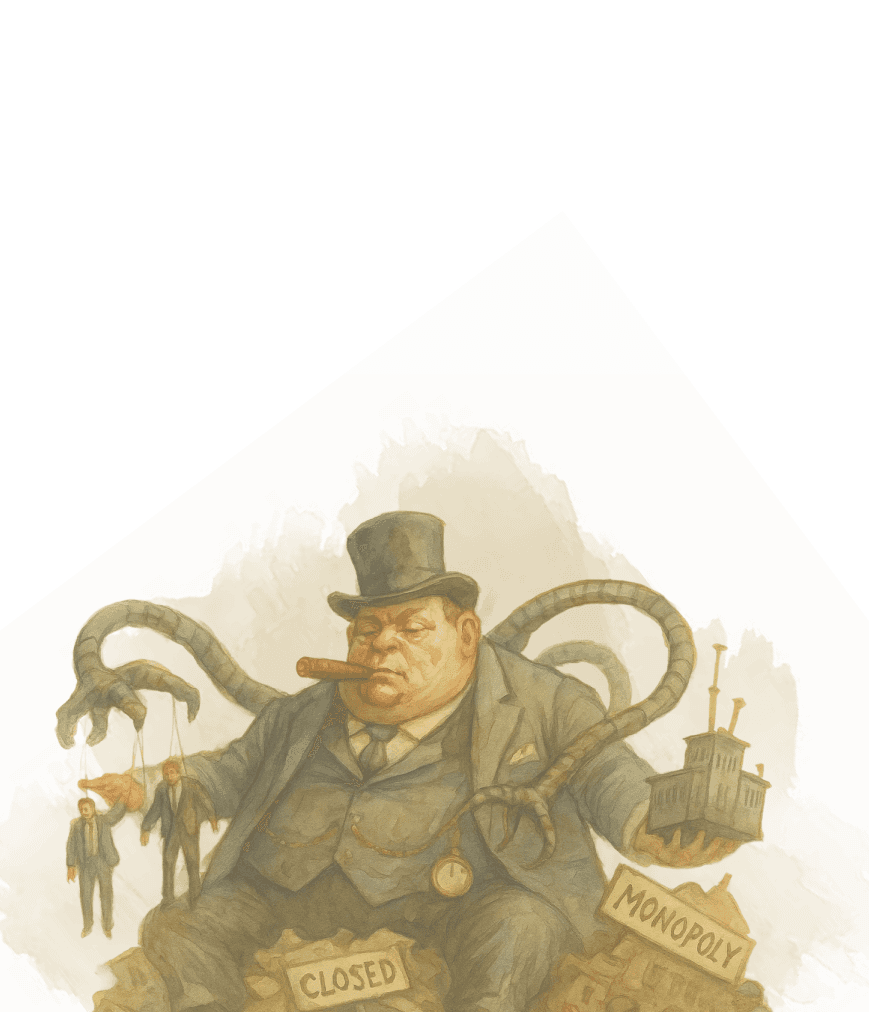

Imagine walking into a store to buy a necessity, only to realise there's just one brand available, dictating the price you pay. Or subscribing to a service because it's the only option in town, even though it keeps hiking its fees. This is the subtle yet pervasive grip of monopolies—businesses that dominate markets with little to no competition. They influence everything from what we buy to how much we save. In this blog, we dive into the world of monopolies, exploring real-world examples and their profound impact on our personal finances.
What is a monopoly?
A monopoly exists when a single company or entity controls an entire market for a product or service, leaving consumers with few or no alternatives. This dominance allows the monopolist to set prices, control supply, and shape market dynamics without the checks and balances that competition provides. Monopolies can arise naturally, through government regulation, or via aggressive business tactics that edge out rivals.
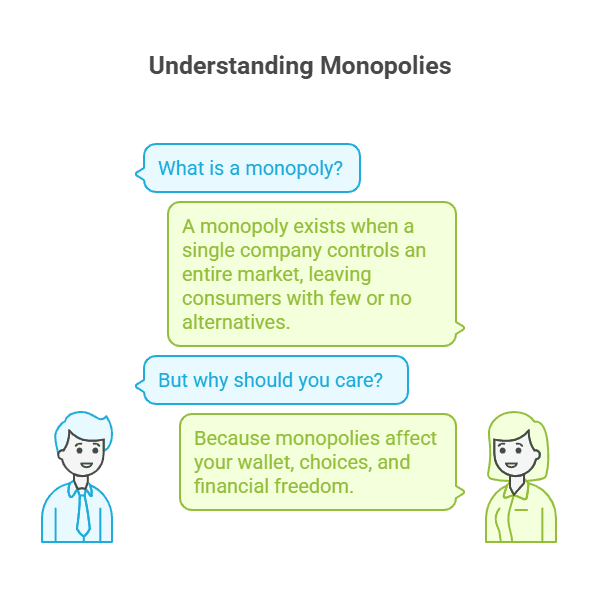
But why should you care? Because monopolies don’t just affect industries—they hit your wallet, your choices, and your financial freedom. Let’s unpack this by looking at real-world monopolies and their ripple effects on everyday people.
Real-world monopolies
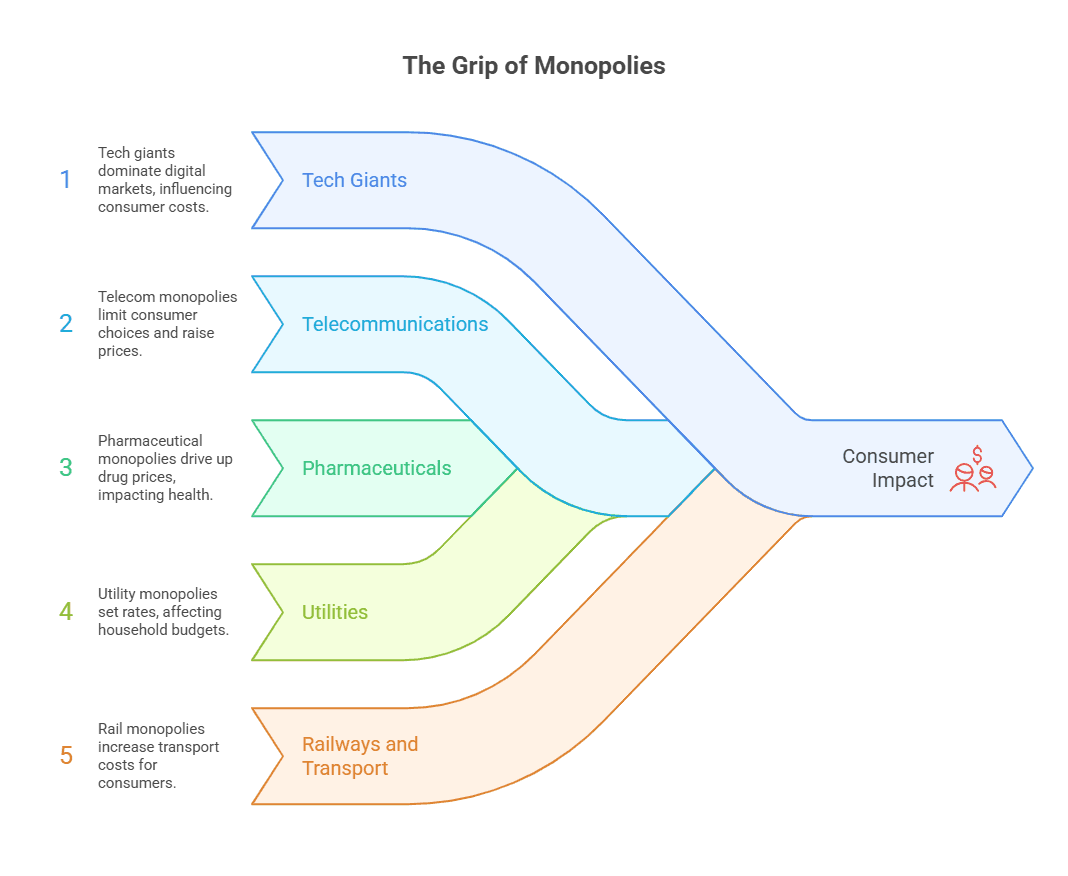
Monopolies, or near-monopolies, are more common than you might think. They often hide in plain sight, shaping markets we interact with daily. Here are a few prominent examples:
Tech giants
The digital overlords: In the digital age, a handful of tech companies dominate global markets. Consider a major search engine that handles over 90% of online searches worldwide or a social media platform with billions of users and little direct competition. These companies control vast ecosystems—search, advertising, cloud services, and more.
How they operate: By acquiring potential competitors, leveraging data to outmanoeuvre rivals, and creating ecosystems that lock users in (think app stores or cloud subscriptions), these firms maintain near-unassailable dominance.
Real-world impact: Advertisers and businesses pay premium prices to reach audiences, costs that are often passed on to consumers through higher product prices. For individuals, switching platforms is tough due to network effects everyone’s already on the dominant platform.
Telecommunications
The connectivity chokehold: In many regions, telecom services are controlled by one or two major players. These companies provide internet, mobile, and cable services, often with overlapping ownership or limited competition due to high infrastructure costs.
How they operate: High barriers to entry (like laying cables or securing spectrum licences) prevent new players from challenging incumbents. Mergers and acquisitions further consolidate power.
Real-world impact: Consumers face high service fees, limited plan options, and sometimes poor customer service due to lack of alternatives. Rural areas often suffer the most, with single providers dictating terms.
Pharmaceuticals
The price of health: Certain pharmaceutical companies hold monopolies over life-saving drugs, especially when patents protect their products. A single firm producing a critical medication can charge exorbitant prices until generics enter the market.
How they operate: Patents grant exclusive rights for years, delaying affordable alternatives. Some firms extend patents through minor tweaks or lobbying, a practice called “evergreening”.
Real-world impact: Patients and healthcare systems bear steep costs, forcing tough choices between health and financial stability. For example, insulin prices in some markets have skyrocketed, despite being around for decades.
Utilities
The essential monopoly: Electricity, water, and gas services are often monopolies, either state-run or heavily regulated private entities. These “natural monopolies” arise because duplicating infrastructure (like power grids) is impractical.
How they operate: Governments often regulate pricing to prevent exploitation, but inefficiencies or lack of oversight can lead to high costs or unreliable service.
Real-world impact: Households have no choice but to pay whatever rates are set, impacting monthly budgets. In some cases, blackouts or water shortages highlight the risks of uncompetitive systems.
Railways and transport
The tracks of control: In certain countries, rail transport is dominated by a single operator, often state-owned or privatised with exclusive rights. This control extends to freight and passenger services, limiting consumer options.
How they operate: Exclusive contracts or government-backed monopolies prevent competition. High capital costs for tracks and trains deter new entrants.
Real-world impact: Commuters face high ticket prices or subpar service, while businesses pay steep freight costs, indirectly inflating consumer goods prices.
These examples show how monopolies span industries, from cutting-edge tech to basic utilities. But their influence doesn’t stop at market control—it seeps into your daily finances.
How monopolies impact personal finances
Monopolies don’t just dominate markets; they reshape how much you spend, save, and invest. Here’s how they affect the common person’s financial life:
Higher costs for goods and services
Without competition, monopolies can charge premium prices. Whether it’s a telecom provider hiking internet rates or a drug company inflating : medication costs, these expenses add up.
Example: If a single telecom provider dominates your area, you might pay 20-30% more for broadband than in a competitive market. Over a year, that’s hundreds of extra dollars.
Impact: Higher costs strain budgets, leaving less for savings, investments, or discretionary spending. For low-income households, this can mean cutting back on essentials.
Limited choices, lower quality
Monopolies reduce consumer options, forcing you to accept what’s offered, even if it’s substandard. A single utility provider might deliver erratic electricity, or a dominant tech platform might push invasive ads.
Example: In areas with one internet provider, slow speeds or frequent outages are common complaints, yet customers have nowhere else to turn.
Impact: You end up paying for inferior products, eroding value for money. This can also lead to frustration and time wasted dealing with poor service.
Stifled wage growth
Monopolies don’t just affect consumers—they impact workers. When a single employer dominates an industry or region (a “monopsony”), they can suppress wages and benefits.
Example: A major tech firm dominating a local job market might offer lower salaries than in competitive regions, knowing workers have few alternatives.
Impact: Stagnant wages limit disposable income, making it harder to save for goals like homeownership or retirement. This also widens income inequality.
Barriers to entrepreneurship
Monopolies create high barriers for new businesses, stifling innovation and entrepreneurship. Small startups struggle to compete with giants that control supply chains, distribution, or advertising.
Example: A small e-commerce business faces steep advertising costs on a dominant platform, draining profits and hindering growth.
Impact: Aspiring entrepreneurs face financial risks, discouraging wealth-building through business ownership. This concentrates wealth among monopolists.
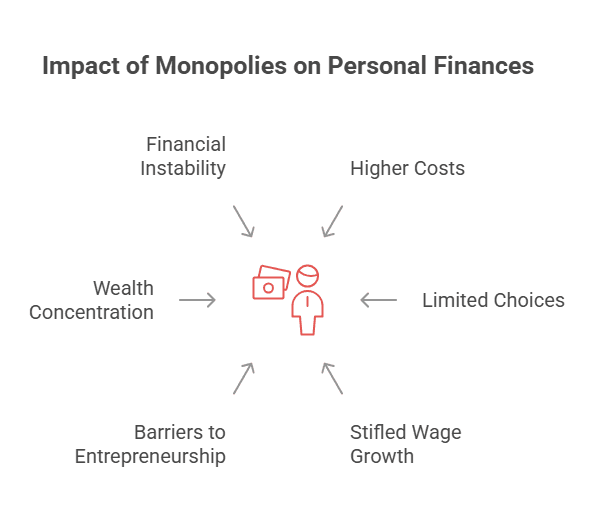
Wealth concentration and economic inequality
Monopolies funnel profits to a few, exacerbating wealth gaps. Their ability to set high prices and suppress wages concentrates economic power.
Example: A pharmaceutical monopoly’s high drug prices burden families, while shareholders and executives reap massive profits.
Impact: Wealth inequality grows, reducing social mobility. Ordinary people find it harder to climb the financial ladder as resources flow upward.
Financial instability
Relying on a single provider for essentials like utilities or healthcare creates risks. If a monopoly fails or hikes prices suddenly, households face financial shocks.
Example: A utility monopoly increasing rates by 15% overnight can disrupt budgets, especially for fixed-income households.
Impact: Unexpected expenses force reliance on credit or emergency savings, derailing long-term financial plans.
Navigating the monopoly maze: What can you do?
Monopolies may seem like unbeatable giants, but you’re not powerless. Here are practical steps to protect your finances:
Shop smart: Compare prices where possible, even in semi-monopolistic markets. Look for discounts, bundled plans, or emerging competitors.
Advocate for change: Support policies that promote competition, like antitrust laws or regulations encouraging new market entrants.
Diversify income: Reduce reliance on a single employer or industry by exploring side hustles or upskilling for competitive sectors.
Budget wisely: Account for monopoly-driven costs (like utilities or internet) in your budget to avoid surprises.
Stay informed: Follow industry news to anticipate price hikes or service changes, giving you time to adjust.
Taking back control
Monopolies are a fact of modern life, but understanding their reach empowers you to make smarter financial choices. From tech titans to utility providers, these giants shape markets and wallets alike. By recognising their impact, higher costs, fewer choices, and economic in equality you can take steps to safeguard your finances.
The power to navigate this landscape lies in knowledge and action. Start today by reviewing your expenses, exploring alternatives, and advocating for fairer markets. Your wallet deserves it.Take a moment to check your monthly bills, internet, utilities, or subscriptions.
Are you paying more than you should?

Newly Launched


Pockvue Solutions Private Limited
#1, CRE Spacez, 2nd Floor, 14th Main Road,
Sector 5, HSR Layout, Bengaluru - 560102